

How to Clean a Clogged Underground Downspout Drain
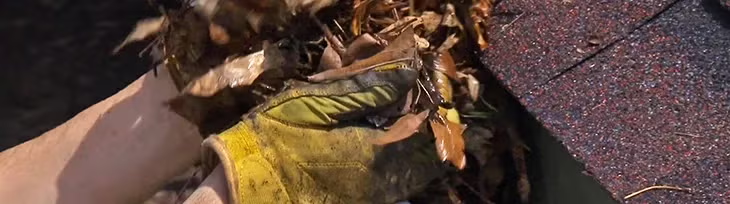
Underground downspout drains carry water from your gutters away from your home to help prevent foundation damage and yard flooding. Because these drains are buried, clogs or pipe damage often go unnoticed until water starts backing up near the house or surfacing in the yard.
This guide explains how to identify a clogged underground downspout, which DIY cleaning methods are safe to try, and when it’s time to stop and call a professional.
In this article:
- What Are Underground Downspout Drains?
- Why Underground Downspouts Clog
- How to Tell If Your Underground Downspout is Clogged
- Tools to Diagnose Underground Drain Problems
- What NOT to Do When Cleaning or Inspecting Underground Downspouts
- 5 Ways to Unclog an Underground Downspout Drain
- DIY vs. Professional Cleaning: How to Decide
- Preventative Maintenance for Underground Downspout Drains
- Keeping Your Underground Downspout Drain Functional
- Frequently Asked Questions
What Are Underground Downspout Drains?
An underground downspout drain is a type of underground downspout and piping system that carries water from your gutter to an exit point to drain further away from your home, elsewhere in your yard. Proper drainage can help prevent foundation damage, basement flooding, and maintain the integrity of your landscaping. For instance, water pooling near your foundation can lead to cracks or structural settling over time.
Unlike traditional downspout extensions, underground downspout drains don’t have to be moved or even visible around the home. These drains are often made out of PVC or thicker-walled corrugated pipes made from HDPE (high-density polyethylene); however, older systems may be made from vitrified clay pipe.
Why Underground Downspouts Clog
Downspouts, especially underground ones, can clog easily. With the rush of water from the gutter, these piping systems can collect debris and dirt. The accumulation of these things can create a clog or slow the circulation of water. However, underground drains also have unique clogging causes in part because they are fully enclosed and difficult to access:
- Underground drain pipe damage – can interrupt the flow of water to the exit point
- Perforated water pipes – cause water to escape elsewhere besides the drain exit
- Root growth in pipes – block the pathway for water to exit the pipe
- Debris buildup — leaves, shingle grit, sediment, etc., creates a debris clog in the pipe
- Improper slope — not enough slope does not give water enough momentum to move through the system properly
How to Tell If Your Underground Downspout Is Clogged
Knowing how to identify a clogged downspout is crucial to maintaining a functional system. It allows the water to move through as intended, but also prevents damage from too much buildup.
Common Signs of a Clog
Unlike an above-ground downspout, it’s harder to detect a clog when the downspout is underground. Since you can’t see the clog firsthand in the buried drain, there are a few other telltale signs to watch for:
- Water pooling or water flow backing up and escaping near downspouts — because it cannot flow to the proper exit point in the downspout
- Overflowing gutters during rainfall — because water cannot exit through the downspout
- Water stains on the basement walls — because water pooling near the home saturates the ground
- Damp or soggy areas in the yard — because water cannot flow to the appropriate drainage area, causing pooling elsewhere in the yard
- Bad smell near the downspout from debris — caused by rotting debris such as leaves
Failure Signals: Clog vs. Pipe Damage
It is crucial to know whether you are dealing with a simple blockage or a structural failure. Leaving a larger issue unattended or misdiagnosing the issue can lead to costly foundation damage or yard erosion. One way to avoid blockages is by cleaning out the pipe at least twice a year, often in fall or spring, as you would your gutter system.
If the pipe is structurally sound, clogs can often be cleared out with proper cleaning. However, if the pipe is cracked, crushed, or displaced, it may need repair or replacement. Be aware that using water to force debris through a broken pipe can cause yard or foundation damage.
Likely a Clog
Signs that debris, such as leaves or silt, is obstructing the flow.
- Slow Flow: Water trickles out of the exit after the precipitation has stopped.
- Intermittent Backup: The drain basin overflows during heavy downpours and drains slowly afterward.
- Visible Debris: You see twigs, shingle grit, or leaf debris at the pipe entrance or exit.
- Gurgling Sounds: Air bubbles are trapped behind a mound of wet debris.
Likely Pipe Failure
Signs that the pipe is crushed, disconnected, or has been breached by roots.
- Mid-Yard Surfacing: Water bubbles up through the grass in the middle of the yard rather than at the designated exit.
- Sinkholes or Depressions: The ground above the pipe route is soft or physically sinking.
- Zero Flow: No water reaches the exit even when you run a high-pressure hose into the intake.
- Foundation Seepage: Water is entering your basement or crawlspace despite the downspout appearing to take the water.
Attention homeowners! 🏡 Did you know that LeafFilter offers FREE estimates for your gutter protection needs? Say goodbye to clogs and hello to peace of mind with LeafFilter!✅ To learn more and get started today, visit https://t.co/6tWbQ0wMvX #ClogFree #FreeEstimate #LeafFilter pic.twitter.com/9JOuBzi7Mp
— LeafFilter Gutter Protection (@LeafFilter) July 18, 2023
Tools to Diagnose Underground Drain Problems
First and foremost, it is vital to diagnose the issue with your underground drain before attempting to fix it. That way, you are tackling the issue at hand and not potentially causing a new one—like a broken pipe.
Should you prefer not to wait until significant rain to check for a clog, there are a few other ways to test for them:
- Spray water into the system with a garden hose and look for water exiting the piping system.
- Try pushing a plumber’s or drain snake into the drainage pipe to see if a blockage stops it at any point. Depending on the clog, you may also be able to pull the debris out with the snake.
- Deploy special pipe inspection cameras into the system to see any blockages for yourself.
What NOT to Do When Cleaning or Inspecting Underground Downspouts
Even when a clog is present, and the downspout is not broken, there are certain types of cleaning behaviors you should not engage in. If you do happen to make any of these mistakes, it is possible that you could damage the pipe or make the problem worse.
- Do not use high-pressure washers indiscriminately — this can crack or further damage weak or failing pipes
- Do not force snakes through resistance — you could damage a pipe
- Do not use drain bladders in old/clay/cracked pipe — fragile or damaged pipes can burst from the pressure
- Do not assume “no exit flow” always means debris — if you continue putting water into a pipe and it isn’t visibly exiting, it may be depositing elsewhere, such as your home’s foundation
5 Ways to Unclog an Underground Downspout Drain
No matter which unclogging maneuver you choose, it is essential to be prepared. Ensure you have the right protective gear, such as eye protection, and that you have a stable footing on the ground before you begin.
Method 1: Hose or High-Pressure Water Techniques
You might be able to dislodge debris with a hose. You can do this by using the spray attachment on your regular garden hose. Using the strongest jet setting, try to knock some of the debris loose. Once some of it starts moving, it will be easier to remove the rest. Be sure to aim the flush from the downspout towards the exit point.
Alternatively, some people have had luck using a pressure washer. This could work, but there is the potential of damaging the pipe with such an intense stream of water, so it is pivotal to only use this method on structurally sound pipes.
Method 2: Use a Drain Snake
This is probably the easiest method: get yourself a drain snake and use it to manually clean out the pipe after disconnecting the underground drain from the downspout. This method is best if you have a minor clog caused by leaves, twigs, and other organic material that is easy enough to push through. If the resistance to the drain snake feels structural, stop immediately to avoid pipe damage.
If the resistance is not structural, it could be mud, bird droppings, and other sticky debris that accumulate inside the drain, trapping twigs and leaves along the way. This debris buildup can harden into a material that would be impossible to push a snake through. In that case, you may need to contact a plumber who specializes in roto-rooting pipes.
Method 3: Vacuum with a Shop Vac
A wet/dry vacuum, often called a shop vac, is yet another option you could try. You can use it to try to suction out debris, or you could use it the other way and attempt to blow the debris out. This works best for short pipe runs and dry debris rather than wet debris.
You can also use a leaf blower to push dry debris out of the pipe. Again, you’re just going to use it to blow into the end that was attached to the downspout.
Method 4: Drain Bladder (Flush Bag)
A drain bladder or flush bag works similarly to the high-pressure water method. Instead of spraying the water directly into the pipe, however, you put the drain bladder into the pipe. With the hose connected, you insert the bladder at least six inches into the pipe opening and fill the bladder until it cannot fill with water anymore. At some point, the bladder will burst, forcefully removing the downspout block.
This method should only be used for structurally sound pipes. It must be avoided with older clay or cracked pipe systems. Using a drain bladder with an old or damaged system is likely to burst or break the pipe.
Method 5: Hydro Jetting or Mechanical Milling
Hydro jetting and mechanical milling should only be done by a seasoned professional. For severe blockages that can’t be fixed through other means, you might need a picote milling machine. These powerful tools work similarly to drain snakes, but turbocharged. The machine rotates a cable at a high speed to break up clogs and debris.
Hydro jetting is the use of high-pressure water to clean the pipe or clear debris. Whereas milling is more aggressive, using specialized rotating nozzles to remove deposits or roots.
If you require hydro jetting or mechanical milling, it is paramount to hire a qualified expert, such as a professional plumber, to use the machine. Improperly used, a picote milling machine could cause severe injury as well as significant damage to the underground piping system.
DIY vs. Professional Cleaning: How to Decide
When you do underground downspout drain cleaning yourself, your main cost will be in equipment rental. The main considerations you’ll need to make are how safe the situation is for you to do it yourself.
DIY vs. Professional Decision Table
| Situation | DIY Safe? | Risk Level | Pro Necessary? |
|---|---|---|---|
| Minor debris at the entry point | Yes | Low | No |
| Slow drainage during light rain | Yes | Medium | Optional |
| Standing water / total blockage | No | High | Yes |
| Suspected tree root intrusion | No | Very High | Yes |
| Older clay or corrugated pipes | No | High | Yes |
| Recurrent clogs (multiple times/year) | No | Medium | Yes (for Camera Inspection) |
Preventative Maintenance for Underground Downspout Drains
While it is difficult to prevent clogged downspouts completely, there are ways to reduce their frequency. The biggest preventative maintenance technique is to do drain cleaning regularly to remove buildup before it becomes a blockage. It’s best to clean out the drain twice a year or more often if you have a lot of trees nearby, creating debris. It’s also important to consider ensuring optimal system design.
Here are maintenance best practices for underground downspout drains:
Preventative Maintenance Checklist
These are steps you can take to prevent buildup or damage to the underground gutter drain.
- Seasonal exit inspections — this can be done when gutter inspections are done in the fall and spring to ensure the exit isn’t clogged
- Annual flushing — run a high-powered hose through the system to flush out any lingering debris before it clogs
- Sediment traps or catch basins — these filters, located at the transition point where the downspout enters the ground, trap debris and allow water through
- Gutter maintenance upstream — make sure the rest of your system is clear and operating efficiently, so the downstream (underground) gutter system can also run smoothly
Slope, Pipe Material, and System Design
When planning the installation of an underground gutter drain, these are crucial considerations to make that can influence how often clogs occur. Because the drain is underground, these are not easy to change after installation.
- Minimum slope importance — the ideal slope should be 1%, in which the drain drops one inch for every eight feet of height, though heavy clay soil may need a higher slope for drainage
- Why poor slope traps debris — poor slope traps debris because the water cannot accelerate with enough force down the slope to expel it
- Corrugated vs. smooth-wall pipe considerations — heavy-duty corrugated pipe can expand and contract more than smooth-wall or PVC pipe, which can cause cracks under temperature changes
Gutter Guards and Downspout Protectors
Gutter guards and downspout protectors can help limit how much debris enters your drainage system, reducing the likelihood of clogs in underground downspout pipes and extending the life of the system overall.
- Brush: guards that look like bristle brushes, which block larger debris, can become a haven for small animals and bugs if not cleaned
- Foam: a soft foam guard that blocks large debris, these guards have the shortest lifespan
- Mesh: offers a barrier of mesh to block large and smaller debris, these guards last the longest
- Strainer: placed in the downspout to block large debris from entering
- Guards and strainers help prevent debris from getting into the downspout from the gutter
- LeafFilter gutter guards use a mesh cover to keep even smaller debris out of your gutter system.
These act as a system-level prevention strategy, but cannot completely fix gutter issues.
Landscaping Considerations
- Plant trees away from drainage systems to help prevent extra tree debris from getting into the system
- Keeping trees away can also help avoid root intrusion, where the roots break into the pipe
Professional Inspections
- If you have a clog you cannot fix or you suspect damage, it’s beneficial to call in the experts, like the professionals at LeafFilter
- Doing annual checkups of your system with your trusted expert can identify potential pipe damage or clogs before they become unmanageable
Keeping Your Underground Downspout Drain Functional
The best way to avoid clogs or damage is by staying on top of gutter maintenance. It’s also good to know the telltale signs of a clogged underground downspout drain, such as slow drainage vs. water pooling in the yard, which can signify pipe damage. However, when drainage becomes an issue, it’s best to always diagnose the problem first to avoid making the issue worse.
You can also install gutter guards to help prevent debris from entering the gutter system in the first place. LeafFilter gutter guards, for example, can help protect your gutters from clogs building up inside.
Frequently Asked Questions
How do you keep buried downspouts from clogging?
There are a few ways to help prevent clogs in buried downspouts. The most effective method is to prevent the clogs from forming inside your gutters.
This can be accomplished with more frequent cleaning (you should clean out your gutters at least twice a year) or by having micromesh gutter guards professionally installed.
Are underground gutter drains worth it?
Underground gutter drains divert water away from the home and can help prevent foundation damage, so many homeowners find that they’re worth it. Ideally, they’ll carry the water, including melting snow, at least 10 feet away from the foundation. If they’re kept clog-free, they can save you money in the long run that you’d otherwise be spending on repairs.
How do you check gutter drains for clogs?
Before a rainy or snowy season, you should test for a blockage. This is simple:
- Disconnect the drain from the downspout, and turn on your garden hose.
- Place the hose into the end of the drain closest to the house.
- Give it a few minutes, and if the water starts to rise or overflow within the pipe, it’s likely there’s a blockage.
How can I tell if my underground downspouts are clogged or damaged?
When water is backing up against the base of the downspout, it can demonstrate that there is a clog preventing water from moving through the system. However, if you see water pooling in the middle of your lawn, that can be a sign that the pipe has broken and water is escaping that way.
When should I hire a professional instead of cleaning underground downspouts on my own?
If you believe the pipe is damaged or there is a total blockage that you cannot remove through DIY methods, it’s a good idea to hire a professional. A professional can ensure that the pipe is not damaged or further damaged by the cleaning. They can also help navigate pipe replacement if that is necessary.
How often should underground downspouts be cleaned and maintained?
Just as with your regular gutter maintenance, it is a good idea to clean and maintain your underground system twice a year. Often, this means in the spring and fall to remove any debris buildup from the changing seasons. You may also want to do a flush annually to wash out any debris before it starts getting stuck inside the pipe.