
How Winter Weather Exposes Weak Gutters (And What to Do)
Winter has a way of revealing the weak gutters in a home that you might not notice during the rest of the year. You might think your gutters are holding up just fine, but the first heavy snowfall or hard freeze acts like a stress test for your entire drainage system. If there’s a loose hanger, a small leak, or a bit of hidden debris, winter will find it—and often make it much worse.
For homeowners wanting to protect their investment, knowing these risks is the first step toward preventing costly damage. When your gutters fail in freezing temperatures, the result can lead to cracked gutters, damaged fascia, and even foundation issues come spring. Let’s break down exactly how winter conditions impact your gutters, the warning signs to look out for, and how a professionally installed gutter system can help you weather the storm.
Why Winter Is the Ultimate Stress Test for Gutters
During spring and summer, gutters have a simple job: catch rain and move it away from your house. But winter changes the game entirely because water behaves differently. It freezes, expands, and gets heavy.
Cold-weather risks are often cumulative. A small amount of debris that wouldn’t cause an overflow in July can turn into a solid block of ice in January. A slightly loose spike might hold up to rain, but under the burden of wet snow, it can pull free from the wood. This season demands more from your home’s exterior, turning minor maintenance oversights into possible structural failures.
Winter Weather Conditions That Reveal Weak Gutters
To protect your home, it helps to understand exactly what your gutters are up against. Here are the specific elements at play during the colder months.
Snow Load and Packed Debris Add Weight
We often underestimate how heavy snow actually is. A single cubic foot of wet snow can weigh up to 20 pounds. Now, imagine your gutters packed with a mix of heavy snow and soggy, trapped leaves. This creates a heavy burden on your gutter hangers and the fascia board they are attached to.
If your gutters rely on aging materials or poorly spaced fasteners, they will show strain first. You might see the metal beginning to bow outward, or the entire system sagging in the middle of a run.
Freezing Water and Blockage in Gutters
When water freezes, it expands by approximately 9%. If your gutters are holding standing water due to a clog or poor pitch, that water can freeze and push outward against the metal walls of the gutter.
This expansion can distort the gutter’s shape, but the bigger issue is the blockage itself. An ice blockage stops melting snow from draining. As heat from your home melts snow on the roof, that water runs down, hits the ice block, and has nowhere to go but over the edge—or worse, back up under your shingles.
Freeze/Thaw Cycles Loosen Joints and Create Leaks
In many regions, winter isn’t just one long freeze. Temperatures fluctuate, causing your gutters to freeze at night and thaw during the day. This cycle causes metal to expand and contract repeatedly.
Over time, this movement stresses the seams, end caps, and corners of your gutter system. Sealants can crack or pull away, creating micro-gaps. You might not notice these leaks when everything is frozen, but as soon as the sun comes out, you’ll see dripping water that can stain siding and rot wood fascia.
Frozen Downspouts and Water Backup
Downspouts are the exit strategy for your roof’s water, but they are prone to freezing in colder climates if water flow is restricted. This often happens at the elbow joints or near the ground if the exit point is blocked by snow.
Signs of a frozen downspout include slow drainage or water backing up and filling the gutter trough. If you see water spilling over the sides of your gutters on a sunny day while the downspout remains dry, you likely have an ice or debris blockage somewhere in the pipe.
Wind and Storm Events Cause Sudden Failures
Winter storms often bring high winds along with precipitation. Wind gusts can twist loose gutter sections or pull at fascia attachments that have already been weakened by rot or rust. If your brackets aren’t secured to the rafters securely, a strong winter storm can be the final straw that pulls a section of gutter loose.
What Weak or Damaged Gutters Look Like in Winter
Winter gutter issues don’t show up the same way everywhere. They’re caused by regional climate patterns. Often, you can diagnose winter gutter damage just by taking a walk around your property.
Exterior Warning Signs (Quick Checklist)
Keep an eye out for these physical indicators that your gutter system is damaged—and remember, signs look different across regions:
- Sagging: The gutter appears uneven or dips in the middle. This is common in the Northeast and Midwest, where heavy snowfall is prevalent. Gutters must support greater weight for longer stretches.
- Separation: Can you see a gap between the gutter and the fascia board? High-wind zones in the Rockies or the Plains states are prone to more frequent separations after storms.
- Cracks and Splits: Visible breaks in the metal, particularly at the seams or corners. These are common in areas with frequent freeze/thaw cycles. Areas like the Great Lakes or the Pacific Northwest experience this throughout the season.
- Loose Fasteners: Spikes that are backing out or hangers that look bent. Harsh winters with ice buildup, typical in the Midwest, can put extra stress on fasteners.
- Peeling Paint: Rust spots or peeling paint on the gutters indicate corrosion and aging. This is especially prevalent in coastal areas such as the Carolinas and Florida. Salty air can accelerate deterioration even in milder winters.
- Water Overflow: Water shooting over the edge during thaws, even when it isn’t raining heavily. In mountainous regions and northern states, snow can quickly melt in the sun, especially on a south-facing roof.
Property Clues You Shouldn’t Ignore
Sometimes your gutter looks okay, but the house tells a different story. Depending on where you live, these signs can signal different underlying issues:
- Water Stains: Dark streaks on your siding or discoloration on the fascia board. In rainy coastal areas or the Pacific Northwest, this might be due to relentless rainfall and slow-draining gutters.
- Ice Patches: Pooled frozen water on driveways or walkways directly under the roofline. Homeowners in New England or the Northern Plains often notice slick patches where gutters overflow into high-traffic zones.
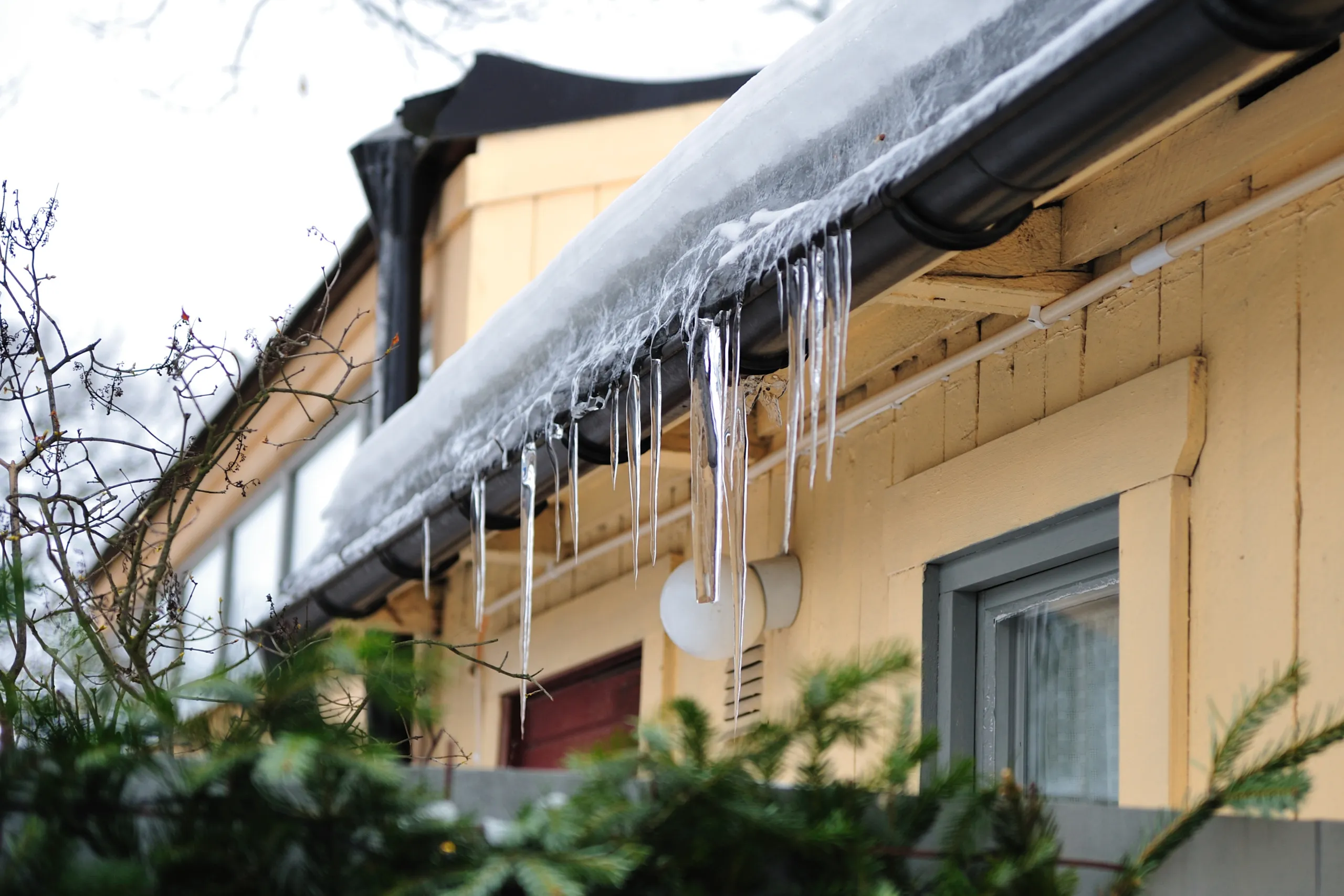
- Icicles: While they look festive, long icicles hanging from the gutter lip usually mean water is trapped and spilling over rather than draining. This is a constant in northern climates with repeated freeze/melt cycles.
- Basement Dampness: Musty smells or wet spots after a thaw can indicate that water isn’t moving away from the foundation. Areas with high water tables or heavy winter rains are particularly prone to this issue.
By understanding how these property clues show up in your specific region, you’ll be better equipped to spot winter gutter problems early and take action that’s right for your home.
Quick Diagnostic: Is It a Maintenance Issue or a Gutter System Problem?
Not all winter water issues require a full replacement. Distinguishing between a simple clog and a structural failure can help you decide your next move.
Issues Often Caused by Clogs or Poor Water Flow
You might just have a blockage if you notice debris sticking out of gutters or overflowing in random spots. Trapped leaves create clogged gutters that hold water, which can then freeze. Often, short-term and resolved by cleaning out gutters, it will return every winter if you don’t address the debris source.
Issues That Point to Installation or Material Problems
If you see persistent sagging, recurring leaks at the same seams, or frequent detachments, you are likely dealing with a structural issue. This could mean your gutters are undersized for your roof area, the pitch (slope) was set incorrectly, or the fastening strategy isn’t strong enough for winter loads. These problems generally require professional repair or replacement to fix permanently.
Prevention: How to Protect Gutters Before and During Winter
The best defense is a good offense. Taking steps to winterize your gutters before the first cold front can save you a lot of headaches.
Pre-Winter Prep: The Best Time to Act
- Clear Out the Debris: Clean out gutters and downspouts thoroughly. If water can’t flow, it will overflow and may freeze.
- Check the Pitch: Make sure your gutters slope toward the downspouts, so water doesn’t sit and stagnate.
- Secure the System: Tighten any loose hangers and check that end caps are sealed to withstand winter winds and snowfall.
- Direct the Flow: Make sure downspouts extend at least a few feet away from your home’s foundation to minimize potential water damage.
In-Season Tips to Reduce Winter Stress
- Monitor Safely: Keep an eye on problem areas from the ground. Do not climb a footstool or ladder when it is icy.
- Watch for Melt: Observe your gutters during sunny days to ensure meltwater is flowing out of the downspouts.
- Hands Off the Ice: Avoid the temptation to chip or pry ice out of your gutters. You are more likely to crack the vinyl or dent the aluminum than you are to solve the problem.
When to Call a Professional
If you see visible separation from the fascia, major sagging that threatens to pull the gutter down, or water entering your home, it is time to call a pro. Attempting DIY repairs on a frozen, slippery roof is dangerous and often ineffective against structural damage.
Winter Performance: Why Professional Installation Matters
For homeowners, professional installation is about saving time and guaranteeing performance. A gutter system is not just a metal trough. It’s an engineered system that needs to be calibrated to your home.
Professionals understand how to fasten gutters securely to the structural rafter tails, not just the fascia board, which provides the strength needed to withstand heavy snow loads and winds. They can also assess the correct gutter sizing and downspout placement to handle the volume of water your roof sheds. This expertise helps ensure your investment holds up season after season.
How Gutter Guards Help Reduce Winter Problems
You might think of gutter guards for winter as just a leaf stopper, but engineered systems offer notable benefits during the colder months, too.
The Winter Benefit: Better Flow, Less Standing Water
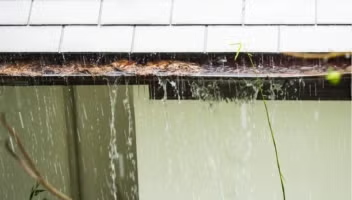
The root cause of many winter gutter issues is standing water. When debris accumulates, it creates a blockage. That blockage holds water, which can freeze. By keeping the gutter trough clear of debris, you dramatically reduce the conditions that create heavy ice blockages.
Why Micro-Mesh Makes a Difference
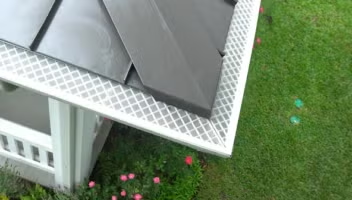
Not all guards are created equally. Systems that use a micro-mesh gutter guard are especially effective because they filter out fine debris. This helps ensure that the water entering your gutter is free flowing, supporting consistent drainage even during melt periods.
LeafFilter: Engineered Micro-Mesh for Year-Round Protection
LeafFilter’s system is designed to handle these exact challenges. The surgical-grade stainless steel micro-mesh keeps debris out, while the uPVC frame is installed with internal hangers that reinforce the strength of your existing gutters.
- Debris Defense: Enhanced water flow allows debris to dry out and blow away, eliminating the clogs that cause freezing backups.
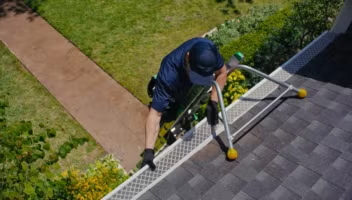
- Structural Support: Professional installation often includes realigning and reinforcing your current gutters with durable aluminum hangers.
- Weather Resistant: Mold and UV-resistant materials made to endure temperature swings without warping or rusting.
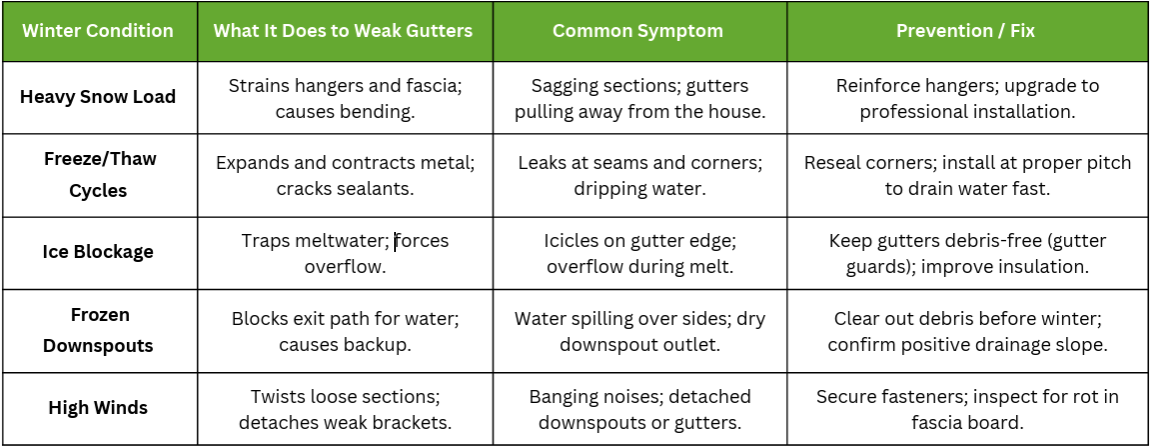
Winter Gutter Problems at a Glance
Here is a quick reference guide to help you identify what might be happening to your gutters this winter.
FAQs
Do gutter guards work in winter?
Yes, gutter guards can be very effective during the winter months. While preventing leaves and debris from clogging the channel, winter gutter guards allow meltwater to flow freely to the downspouts. This reduces the standing water that leads to ice blocks and sagging. However, performance depends heavily on the design and quality of the installation.
Why are my gutters overflowing on sunny winter days?
This usually happens because the snow on your roof is melting, but the water has nowhere to go. If your gutters or downspouts are clogged with ice or debris, that meltwater backs up and spills over the edge. It’s a clear sign of a system blockage.
What causes downspouts to freeze?
Downspouts freeze when water moves too slowly or gets trapped. This is often caused by a partial clog of leaves near the elbow or an improper slope that leaves standing water in the pipe. When the temperature drops, standing water can freeze and block the flow.
How do I know if my gutters need repair or replacement after winter?
Look for the structural signs we mentioned earlier: sagging, pulling away from the wood, or seams that leak even after being sealed. If the metal is bent or corroded, or if the system creates water issues near your foundation, it’s likely time for a professional replacement.
Should I DIY gutter fixes in winter?
Safety should always come first. Snowy and icy conditions are extremely dangerous. While you can handle ground-level tasks like clearing out a downspout exit, structural repairs or clearing roof-level ice should be left to professionals with the right gear and experience.
Winter Reveals Problems, Fix Them Before They Spread
Winter can be tough on your home. The leaks, drips, and sags you see now are warning signs that your gutter system isn’t functioning properly. Ignoring these signs can risk broken gutters and water damage to your foundation, siding, and roof.
Take proactive steps, from inspecting your perimeter to investing in professional installation, to help ensure your home remains protected. If you want to remove debris from the equation and reinforce your gutters for the seasons ahead, consider a professionally installed solution like LeafFilter. It’s a smart upgrade that adds value to your home while minimizing the time spent on gutter maintenance.
Ready to protect your home from winter weather? Schedule a free inspection today and see how LeafFilter’s local experts can keep your gutters flowing year-round.