
Signs Your Gutters Were Installed Incorrectly
Improperly installed gutters can cause water damage even if they’re new. The good news: most installation issues show visible warning signs that homeowners can spot early. Keeping an eye out for signs of leaking gutters or learning to spot foundation damage can help you get ahead of costly repairs.
Proper gutter installation is key to directing rainwater off your roof and away from your siding and foundation. This article walks you through the most common signs of incorrect gutter installation, explains what each issue means for your home, and outlines your next steps if you find a problem.
In this article:
- 9 Signs Your Gutters Were Installed Incorrectly
- Why These Installation Issues Matter
- What to Do If You Spot One or More of These Signs
- How to Help Prevent Installation Problems in the Future
- Frequently Asked Questions
9 Signs Your Gutters Were Installed Incorrectly
When installed properly, gutters should collect rainwater and direct it safely away from your home’s foundation. If your gutters were installed incorrectly, the earliest warning signs often appear along the roofline or at ground level near your home.
Water pooling beside the foundation, gutters leaking during rainstorms, or visible overflow are common indicators that gutters and downspouts aren’t functioning as intended. These issues are often caused by installation problems such as improper slope, poor sealing, inadequate support, or incorrect downspout placement.
Below are some of the most common signs that your gutters may have been installed incorrectly, and what usually causes them.
1. Water Overflowing During Rain
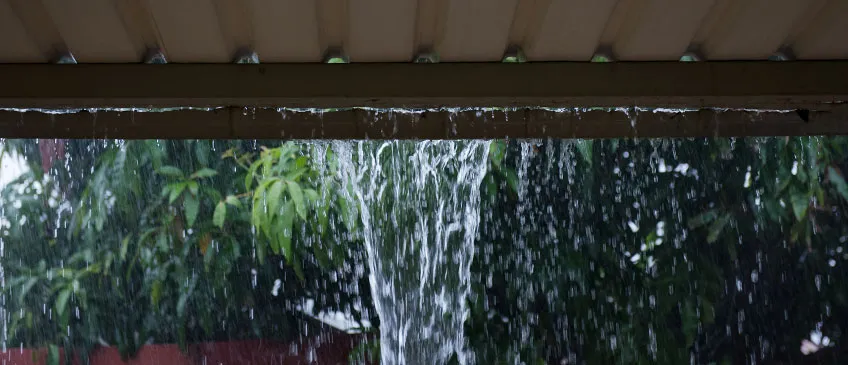
Gutters should direct water smoothly toward downspouts and away from the roof. If you see water spilling over the edges during rain, your gutter system may not be working as intended.
Common causes include improper sealing, a pitch (or slope) that doesn’t properly channel water towards the downspouts, undersized gutters for your roof area, or too few downspouts to handle the volume of water.
2. Standing Water Inside the Gutters
Once rain stops, gutters should drain completely. Water pooling inside the gutter channels for hours or days after the rain stops could signal a problem.
This problem can happen when gutters have an incorrect slope or pitch, sagging sections, or hangers spaced too far apart, allowing the gutter to dip and create low spots where water collects.
3. Gutters Sagging or Pulling Away from the Fascia
Gutters should sit flush against the fascia board, the flat paneling that seals off the attic and makes up the roof edge. Your gutters should also be fairly even without any dips between downspouts. Sagging or detached portions could point to broken fasteners, brackets, or heavy debris weighing the gutters down.
Common causes include fasteners or hangers placed too far apart, inadequate support for the gutter’s weight, or excess debris adding stress to an already weak system.
4. Leaks at Seams, Joints, or End Caps
Look for dripping at connection points where gutter sections meet or at end caps. These leaks can damage fascia boards and siding over time.
This can occur during installation if sealants aren’t given time or are unable to properly cure. The number of seams in regular gutters, in comparison to seamless gutters, can also be a factor because there are more failure points.
5. Drips or Water Getting Behind the Gutter
If you notice water running down the back of the gutter and onto your fascia or siding instead of flowing into the gutter channel, it may not be positioned correctly against the roofline.
This often happens if gutters are mounted too low, which can cause water from the roof to overshoot the gutter opening. It’s also important to check for the gap between the roof and gutter.
6. Uneven or Wavy (“Rollercoaster”) Gutters
Check your gutters from the ground level. Gutters should form a clean, straight line along the roofline. If your gutters appear wavy or mismatched, with noticeable gaps between the roofline and gutter, they may have been installed incorrectly.
This can happen if pitch isn’t uniform, sections weren’t aligned properly during installation, or if fasteners weren’t secured properly.
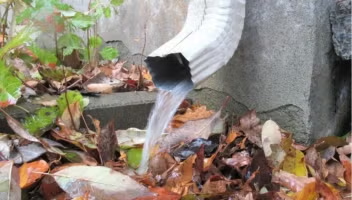
7. Downspouts Dumping Water Too Close to the Foundation
This can look like downspouts discharging water directly at the base of your home instead of several feet away from the foundation.
Common causes are poor downspout placement during installation or missing extensions that would direct water farther from the house. Most homes should have downspouts at every corner, but buildings with longer walls may need even more downspouts, ideally one every 30-40 feet. They should be positioned and angled so that water flows into a natural channel away from your home. Downspouts might need additional tubing on the end to ensure that the water flows far enough away.
8. Water Damage on Siding, Foundation, or Landscaping
Foundation damage can look like stains on siding, rot on fascia boards, foundation cracks, mold growth, or eroded landscaping near the roofline. Also, keep an eye out for mold, warping floorboards, or cracks in basement walls.
Common causes are chronic overflow or misdirected runoff from poorly installed gutters that aren’t directing water away from your home.
9. Frequent Clogs Even After Cleaning
Gutters that clog constantly despite regular cleaning, with debris accumulating in the same spots, could be an indicator of improper installation rather than debris load.
Common causes for debris collecting are pitch issues that prevent water from flowing toward downspouts, insufficient downspouts for your roof size, or improperly sized gutters that don’t allow debris to fully wash away.
Why These Installation Issues Matter
Catching installation issues early gives you more options and can lead to lower repair costs. A loose hanger, minor leak, or improper slope may only require a simple adjustment when addressed promptly. Left uncorrected, those same issues can escalate into water damage that affects multiple parts of the home and requires more extensive repairs. Early detection also allows you to fix problems on your own timeline rather than during a storm or emergency.
- Structural Damage: When gutters fail to direct water away from the home, runoff can erode the soil around the foundation. Over time, this erosion increases hydrostatic pressure against foundation walls, which can lead to cracking, shifting, and water intrusion. Once water enters foundation cracks, it can damage wooden supports and compromise structural stability.
- Increased Maintenance and Repair Costs: Installation issues often compound over time. For example, a poorly placed hanger can alter gutter pitch, causing water and debris to pool. The added weight stresses nearby fasteners, leading to sagging sections and additional failures. What starts as a small installation mistake can eventually require large-scale gutter repairs or full replacement.
- Mold and Mildew Growth: Excess moisture caused by leaking or overflowing gutters can find its way into walls, basements, and crawl spaces. This creates ideal conditions for mold and mildew growth, which may go unnoticed for years before becoming a visible or health-related problem. Preventing prolonged moisture exposure is far easier than remediating mold after it develops.
- Fascia, Soffit, and Siding Damage: When gutters leak or overflow, water runs down exterior surfaces that are not designed to handle constant moisture. Over time, this can lead to rotted fascia boards, damaged soffits, warped or stained siding, and peeling paint. These issues not only affect curb appeal but also weaken the home’s protective exterior envelope.
What to Do If You Spot One or More of These Signs
If you notice any of these warning signs, it’s important to remember that early intervention can help prevent minor issues from becoming major repairs.
Once you’ve identified the scope of the problem, you can decide whether it’s something you can address yourself or if professional help is the safer, more effective option. For minor issues like a loose fastener in an easily accessible area, a quick fix may be possible. But if you notice multiple signs such as sagging, leaks, or water pooling, it could be time to contact a licensed gutter professional for a full assessment.
Simple DIY Checks Homeowners Can Do
Here are a few simple checks you can do yourself:
- Observe gutters during rainfall to see if water overflows or pools
- Look for visible sagging, gaps between gutters and roofline, or stains on siding
- Check that downspouts discharge water several feet away from the foundation
- Use binoculars to inspect higher sections instead of climbing
Safety note: Working near roofs with a ladder can involve fall risks and potentially unstable ladders. If you’re uncomfortable working on ladders or lack proper safety equipment, it’s best to call a professional.
When It’s Time to Call a Professional
Some gutter issues require professional assessment and repair. Contact a licensed gutter professional if you notice:
- Multiple warning signs occurring together
- Persistent overflow or standing water despite cleaning
- Visible damage to fascia, soffit, or roofline
- Problems on home with two or more story sections or anywhere requiring unsafe ladder access
How to Help Prevent Installation Problems in the Future
If you are looking to get new gutters installed, keep these tips in mind to prevent any issues down the line.
Choosing the Right Gutter System
Systems should feature the correct gutter size for your area’s rainfall, not just your roof size. Make sure you have the right size by consulting with a professional to ensure your gutters can handle local weather patterns. Undersized gutters are a common installation mistake that can lead to chronic overflow.
Importance of Professional Installation
Proper gutter installation depends on precise details that directly affect performance and longevity. One of the most critical factors is gutter slope, or pitch, which ensures water flows steadily toward downspouts instead of pooling. Professional installers know how to calculate and set this pitch correctly using specialized tools, rather than relying on visual estimates.
Essential Features to Look for in a Gutter System
Look for seamless gutter systems when possible to minimize leak-prone joints. If you have nearby trees, professionally installed stainless steel micromesh gutter guards can reduce debris buildup and help prevent clogs.
And of course, be sure to keep up with regular gutter inspections and maintenance, increasing the likelihood that you catch the early warning signs that your gutters need some help so that you can act quickly to fix any issues you notice.
on LeafFilter®

Frequently Asked Questions
What happens if gutters are not installed properly?
Improperly installed gutters can cause water to overflow, pool, or drain in the wrong direction. Over time, this can lead to foundation erosion, siding and fascia damage, basement moisture issues, mold growth, and landscape washout. Even small installation issues, like incorrect slope or loose fasteners, can develop into larger issues if not caught early.
Can incorrect gutter installation cause basement leaks?
Yes. When gutters or downspouts don’t direct water far enough away from the home, excess runoff can collect near the foundation. Over time, this increases hydrostatic pressure around basement walls, which can lead to leaks, dampness, or water intrusion, especially during heavy rain.
Are gutters supposed to be level or sloped?
Gutters should not be perfectly level. They are designed to have a slight slope, typically about a half inch every 10 feet, so water flows toward the downspouts. If the slope is too shallow, water can sit and pool. If it’s too steep or uneven, water may overshoot the gutter or cause sections to sag.
How often should gutters be inspected for installation problems?
Gutters should be visually inspected at least twice a year, usually in the spring and fall, and after a major rainstorm. It’s also a good idea to check them after installation to catch any issues early. Look for signs such as standing water, overflow during rain, sagging sections, or water stains on siding and around the foundation.
What should I do if I think my gutters were installed incorrectly?
Start with a ground-level inspection during or after rainfall to identify visible issues like overflow, pooling, or misdirected downspouts. Minor problems, such as loose fasteners or small leaks, may be repairable. If you notice multiple warning signs, recurring issues, or damage to fascia, siding, or the foundation, it’s best to contact a professional for a full evaluation.