

Why Are Gutters Important in the Northeast? A Four-Season Guide to Home Protection

Northeast homes deal with rain, snow, ice, freeze-thaw cycles, and heavy fall leaf drop — often all within the same year. That combination puts more strain on a gutter system than almost anywhere else in the country. Wonder why are gutters important in the Northeast? It’s because they’re the first line of defense protecting your roofline, siding, foundation, and walkways from a nearly year-round water load. Skip that protection, and the region’s weather will find every weak point in your home.
This guide breaks down what makes Northeast weather so demanding, what your gutters actually protect, and what you can do about it in every season.
In this article:
- What Makes Northeast Weather So Hard on Gutters
- What Gutters Actually Protect on Your Home
- What Happens When Gutters Clog or Overflow
- Why Fall Leaves and Winter Ice Are a Dangerous Combination
- Can Snow and Ice Damage Your Gutters?
- How Often Should Gutters Be Cleaned in the Northeast?
- Are Gutter Guards Worth It in the Northeast?
- Frequently Asked Questions
- Protect Your Home Year-Round with LeafFilter®
What Makes Northeast Weather So Hard on Gutters
Most regions deal with one or two seasonal weather challenges. The Northeast deals with all of them, one after another, on the same gutter system. Heavy rain in spring and summer. Snow, ice, and repeated freeze-thaw cycles all winter. Then a fall leaf drop dense enough to bury a lawn in one weekend.
This isn’t just rain management — it’s four-season water control. A gutter system here must handle wind-driven storms and Nor’easters that dump inches of rain in hours; snow loads heavy enough to bend metal, and the slow, repeated freezing and thawing that loosens fasteners over time. Compare that to a home in, say, the Southeast or Southwest, where gutters mostly deal with rainfall and the occasional windstorm. Northeast gutters work harder, longer, and through more extreme swings — which is exactly why gutter protection matters more here than in milder climates.
Keeping your gutters up to the challenge helps protect your home from leaks, rot, and foundation damage in all four seasons. For more tips on seasonal prep, check out our Fall Home Maintenance Checklist.
What Gutters Actually Protect on Your Home
Gutters aren’t just about keeping water off your driveway. A working gutter system protects several parts of your home at once:
- Roof edges and fascia: Overflowing water saturates the fascia board and can work its way under shingles at the roofline.
- Siding and trim: Water spilling over the gutter edge runs down siding, causing stains, warping, and premature wear.
- Foundation and basements/crawl spaces: Gutters channel water away from the foundation. When they fail, water pools right where you don’t want it — next to your home’s structural base.
- Landscaping and walkways: Overflow near entryways refreezes into ice, creating a slip hazard right where you walk every day.
Older Homes, Basements, and Tree-Lined Neighborhoods
Some Northeast homes face more risk than others, and it comes down to three regional factors that don’t get much attention elsewhere.
First, older Northeast housing stock often has drainage systems that were never updated for today’s storm intensity. A gutter system, built decades ago, wasn’t designed for the rainfall volumes we see now.
Second, basements are far more common in Northeast homes than in many other parts of the country. That raises the stakes considerably. A foundation leak here doesn’t just affect the perimeter of the house; it can directly threaten a finished or storage space. Read more to learn how to address basement water intrusion.
Third, tree-heavy neighborhoods, a hallmark of the Northeast’s charm, mean higher debris loads. More trees mean more leaves, seed pods, and branches ending up in your gutters every fall, compounding the clog risk before winter even arrives. Read more about protecting your foundation.
What Happens When Gutters Clog or Overflow
A clogged gutter doesn’t just stop working quietly in the background. It creates visible and sometimes costly problems:
- Foundation erosion: Water overflowing near the foundation erodes soil and can eventually crack the foundation itself.
- Fascia rot and siding stains: Constant moisture exposure rots wood fascia and leaves streaky, hard-to-clean stains on siding.
- Basement moisture and leaks: Overflow that pools near the foundation often finds its way into basements and crawl spaces.
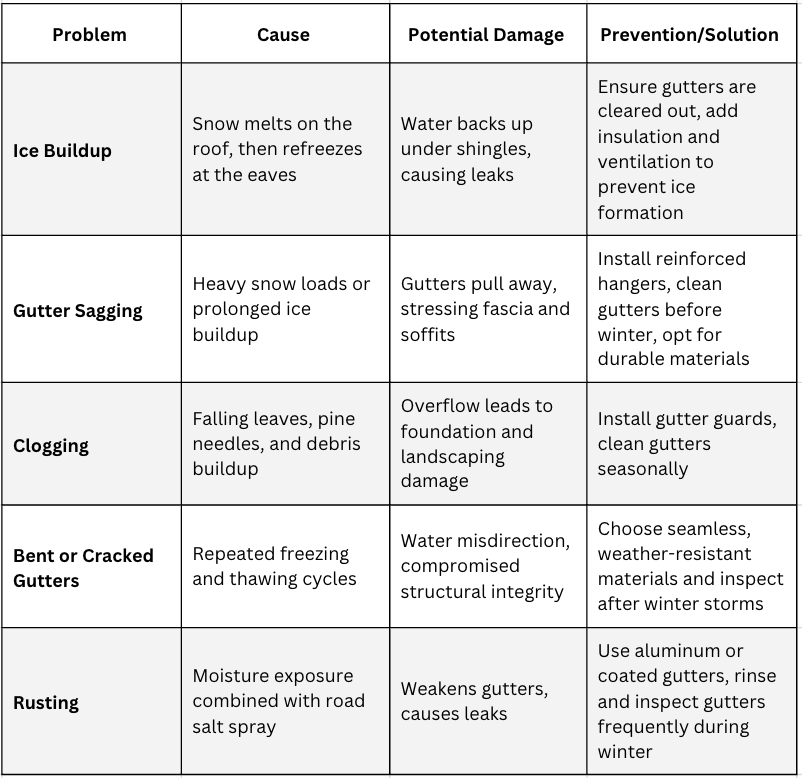
- Sagging gutters: Debris, snow, and ice add weight that pulls gutters away from the roofline over time.
- Slippery walkways: Overflow near entryways refreezes overnight, turning a walkway into a hazard by morning.
None of these problems show up overnight. They build slowly, season after season, until a clog you ignored in October becomes a basement leak in February. Regular cleaning or investing in clog-resistant options can stop these problems before they start. Read more about how clogged gutters cause water damage.
Why Fall Leaves and Winter Ice Are a Dangerous Combination
Fall and winter aren’t separate problems in the Northeast — they’re connected. Leaf buildup in autumn sets your gutters up for a rough winter. If gutters are clogged when the first freeze hits, water has nowhere to go but up and over the edge.
Clogged drainage can worsen ice buildup at the roof edge, since trapped water freezes in place instead of flowing through the downspout. To be clear: a clogged gutter doesn’t single-handedly cause ice dams — that’s a roof-and-attic insulation issue. But clogged gutters absolutely make roof-edge ice problems worse by giving standing water more opportunity to freeze in place.
Add the physical weight of snow and ice on top of trapped leaves, and you’ve got a gutter system under real structural strain — right when it’s hardest to check it.
Can Snow and Ice Damage Your Gutters?
Yes. Snow and ice damage gutters through a combination of weight load and freeze-thaw strain, and it happens more in the Northeast than almost anywhere else.
Snow accumulation adds significant weight to a gutter system, especially when it’s paired with trapped leaves or debris. As temperatures fluctuate, ice inside the gutter expands and contracts, gradually loosening fasteners and hangers. Over enough winters, that repeated stress causes sagging, separation, and even sections pulling away from the roofline entirely.
Standard gutter systems can handle occasional snow and ice, but they’re not necessarily built for repeated freeze-thaw cycles year after year. Properly reinforced systems — with sturdier hangers and secure fastening — are built to withstand regional stress better than a standard installation.
How Often Should Gutters Be Cleaned in the Northeast?
For most Northeast homes, clean out gutters at least twice a year, with additional cleanings depending on your property’s tree coverage and storm activity. Here’s a practical schedule:
- Late fall, before freezing weather sets in. This clears out leaf debris before it freezes in place and blocks drainage all winter.
- Early spring, after the snow and ice season. This removes anything that accumulates over winter and checks for freeze-thaw damage.
- After major storms. High winds and heavy rain can deposit debris or dislodge sections that need immediate attention.
- More frequently on tree-heavy properties. Homes surrounded by mature trees may need quarterly cleanings to keep up with debris volume.
Skipping any of these windows — especially the late-fall cleanout — is one of the most common ways Northeast homeowners end up with winter drainage failures.
Are Gutter Guards Worth It in the Northeast?
For most Northeast homeowners, gutter guards are worth it because they reduce the clog-related risks that come with the region’s heavy leaf drop and winter weather. They’re not a cure-all, and they won’t eliminate gutter cleaning — but they drastically cut down on the debris buildup that leads to overflow, sagging, and worsening roof-edge ice problems.
There’s also a safety angle worth considering. Clearing out gutters in icy or snowy conditions is genuinely dangerous, and most homeowners have to repeat the task multiple times a year without protection. Gutter guards reduce how often that maintenance is necessary in the first place.
Frequently Asked Questions
Do homes in the Northeast need gutters?
Yes. Without gutters, water runs directly off the roofline onto siding, walkways, and the foundation, accelerating erosion and increasing the risk of basement leaks. In a region with heavy rain, snow, and freeze-thaw cycles, gutters aren’t optional — they’re a core part of protecting your home structure.
What’s the best gutter material for cold, snowy climates?
Stainless steel and heavy-duty aluminum systems generally hold up best against the Northeast’s freeze-thaw cycles and snow loads. These materials resist the corrosion and warping that lighter or lower-grade materials are more prone to over repeated winters.
Can I install gutter guards myself, or do I need a professional?
While some gutter guard products are marketed as DIY-friendly, professional installation ensures gutter guards are properly fitted to your existing gutter system and can handle regional snow and ice loads. Improper installation can reduce effectiveness or even void a product warranty.
Protect Your Home Year-Round with LeafFilter
Gutters in the Northeast aren’t a seasonal afterthought — they’re a four-season, whole-home protection system working against rain, snow, ice, and leaf debris nearly every month of the year. Given the region’s older housing stock, higher rate of basements, and tree-dense neighborhoods, that protection matters even more here than in milder parts of the country.
LeafFilter’s micromesh gutter guard system is designed for exactly this kind of regional stress — blocking leaf debris in the fall while standing up to the freeze-thaw cycles and snow loads that define a Northeast winter. It’s backed by a limited-lifetime, transferable warranty, and installed by local experts across offices throughout the Northeast. Fewer trips up an icy ladder. Fewer clogs to worry about before the first freeze. A gutter system built for the weather you actually deal with.
Schedule your free consultation with your local LeafFilter gutter experts to find out what protection looks like for your home.