
Hardening Your Home: How to Make Your Home Less Vulnerable to Wildfire Spread
When homeowners think about wildfire preparedness, they often think about evacuation plans and emergency supplies. Those steps are important, but your home’s exterior deserves attention, too.
Home hardening focuses on the materials, maintenance, and outdoor conditions that can influence how your property responds during wildfire season. It’s not about making a home “fireproof.” No house can be completely protected from extreme conditions. Instead, it’s a practical way to help reduce vulnerability to wind-blown embers, radiant heat, and nearby combustible materials.
By focusing on smart maintenance and thoughtful material choices, you can take meaningful steps to support your overall wildfire preparedness.
What Does Hardening Your Home Mean?
Hardening your home means making updates to your home’s exterior and surrounding property to help reduce vulnerability to wildfire exposure. This can include using fire-resistant or noncombustible materials, keeping gutters and rooflines cleared out of dry debris, screening vents, maintaining wooden decks, and creating defensible space around the house.
The main goal is to reduce places where wind-blown embers, small flames, or radiant heat could ignite combustible materials near the structure. It is a proactive, step-by-step process that focuses on the areas most likely to catch fire first.
Home hardening is a layered approach that combines building materials, exterior maintenance, and defensible space.
Why Home Hardening Matters During Wildfire Season
Wildfire risk is not only about direct flames moving across a landscape. Many wildfire-related home ignitions begin with tiny, wind-blown embers or small flames. Embers can travel up to five miles from the main fire, landing on the home or surrounding landscaping.
According to Wildfire Risk to Communities, the majority of homes lost to wildfire are first ignited by embers and small flames. The National Interagency Fire Center (NIFC) also notes that research shows most homes ignite during a wildfire because of embers. This makes the areas around the home especially important.
When embers land on vulnerable entry points or dry fuel sources, they can start a spot fire that threatens the structure. Because flying embers are such a significant concern, home hardening often starts with the home ignition zone. It works together with defensible space to reduce fuel sources and address vulnerable entry points.
What Are Defensible Space Zones?
Defensible space is the area around a home where vegetation, debris, and combustible materials are reduced or spaced out to help slow fire spread. It does not mean removing all landscaping or paving your entire yard. It means maintaining the property with thoughtful plant spacing, regular pruning, and smart material choices in mind.
Start With Zone 0: The First 5 Feet Around Your Home
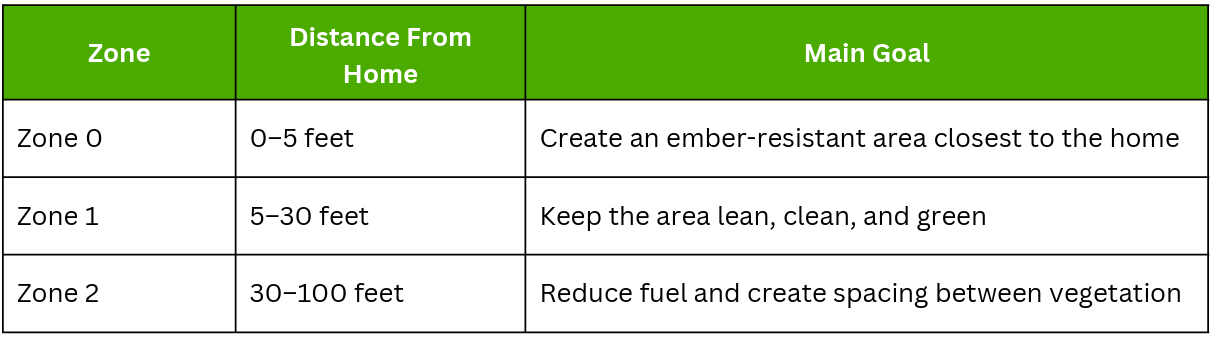
Zone 0, also called the ember-resistant zone, is the area within 0–5 feet of the home and any attached structures, such as decks or porches. This is the area closest to the house and one of the most important places to reduce combustible materials.
Because Zone 0 touches your siding, doors, and foundation, keeping it clear can help reduce the chance of a small surface fire from spreading directly to your home.
Ready for Wildfire identifies Zone 0 as the area focused on intense fuel reduction to help protect against ember attacks. CAL FIRE similarly states that the first five feet from the home is the most important area. Keeping this area clear helps make it less likely that embers will ignite materials that can spread fire to the home.
What to Remove or Reduce in Zone 0
To create a more ember-resistant zone, start by removing items that can easily catch fire.
Include this practical checklist in your regular yard maintenance:
- Dry leaves, pine needles, and plant debris
- Combustible mulch directly against the home or foundation
- Firewood or lumber stored near exterior walls
- Outdoor cushions, doormats, and fabric items
- Trash, recycling, or storage bins
- Dead plants or dry vegetation touching the home
- Combustible items stored under decks or stairs
What to Use Instead
You don’t have to leave the space around your foundation completely bare. The goal is to create a cleaner, more thoughtfully maintained transition between your home and landscaping.
Consider using:
- Gravel, stone, pavers, or poured concrete
- Well-spaced container plants, where allowed by local guidance
- Noncombustible edging or hardscaping to define garden beds
- Regular sweeping and routine debris removal
- Cleaner transitions between landscaping and exterior siding
Zone 1: Keep It Lean, Clean, and Green
Zone 1 covers the area 5 to 30 feet from your home. The focus here is to break up continuous paths of fuel.
To maintain this zone effectively:
- Remove dead vegetation, dry leaves, and pine needles.
- Keep grass mowed and maintained according to local guidance.
- Prune shrubs and lower tree branches to create vertical space.
- Space plants thoughtfully so fire cannot easily jump from one to the next.
- Avoid clusters of combustible material like patio furniture placed close to dense shrubs.
- Keep leaves and debris out of gutters, rooflines, and decks to reduce places where embers may land.
Zone 2: Reduce Fuel Further From the Home
Zone 2 extends from 30 to 100 feet from your home, or to your property line. The goal is to reduce the intensity of the fire as it approaches the property.
To support this zone:
- Thin or space trees and shrubs horizontally where appropriate.
- Remove fallen branches, dead plants, and excess ground debris.
- Keep woodpiles and storage areas far away from the home where possible.
- Maintain clear access routes for emergency vehicles when relevant.
- Follow local fire authority or forestry guidance for your specific terrain and slope.
Home Hardening Checklist: Areas to Address Around the House
Hardening your home against wildfire spread requires looking closely at the structure itself. Here is a checklist of important exterior areas to review.
Roof and Gutters
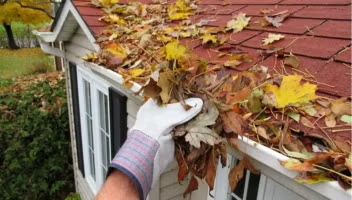
The roof is often considered one of the most vulnerable parts of a home during a wildfire because of its large surface area. Rooflines, especially valleys, can collect leaves, pine needles, twigs, and other wind-blown debris. Gutters are also important to check because debris can build up out of sight.
When dry debris gathers in your gutters or on your roof, it creates a place where flying embers may land and ignite. Keeping gutters and roof valleys cleared out is an important ongoing maintenance task.
As part of a broader plan, consider gutter guards. LeafFilter Gutter Protection helps keep leaves, twigs, and debris out of gutters with professionally installed stainless steel micromesh. This can help support a cleaner roofline and reduce a common source of gutter debris.
Vents, Openings, and Screens
Vents provide necessary airflow for your home, but they can also create openings where embers may enter. Small gaps can allow embers to reach the attic, crawl space, or other enclosed areas where dry materials may be present.
Check attic, foundation, crawl space, and gable vents regularly. Repair damaged screens immediately. Use appropriate ember-resistant venting where recommended by local building codes. Seal gaps around vent frames where embers or debris could collect.
Eaves, Soffits, and Fascia
Eaves are the edges of your roof that overhang the exterior walls. Eaves and soffits can be vulnerable where gaps, exposed wood, or debris are present. Heat can get trapped under open eaves, and embers can lodge in exposed framing.
Ready for Wildfire recommends boxing in open eaves with ignition-resistant or noncombustible materials to help prevent ember entry. Always keep these areas clean, structurally intact, and well-maintained.
Siding and Exterior Walls
Your exterior walls can be exposed to radiant heat or flames from nearby burning vegetation. Look for damaged siding, gaps, or areas where bushes and vegetation touch the home.
Use fire-resistant or ignition-resistant materials where appropriate when updating your exterior. Keep combustible items, such as trash cans or firewood, away from exterior walls. Maintain a clean separation between plants, ground mulch, and the bottom edge of your siding.
Windows and Doors
Windows can break from the intense radiant heat, which may allow embers to blow into your home. Check the weatherstripping, seals, and frames around all windows and exterior doors.
Repair broken glass or damaged screens right away. Keep combustible décor, potted plants, and outdoor furniture away from openings. When replacing older single-pane windows, consider upgrades such as tempered glass or dual-pane windows, which are more resistant to heat stress.
Decks, Patios, and Fences
Wooden decks and fences attached to the house can create a pathway for fire. Decks often collect debris between boards, underneath the structure, and where the deck meets the exterior wall.
CAL FIRE identifies combustible items stored underneath decks and combustible materials within the first 0–5 feet around decks as significant risk factors. Sweep your deck regularly to remove pine needles and dry leaves. Avoid storing combustible items, such as cardboard, lumber, or cushions, underneath decks. Use noncombustible materials or metal flashing where appropriate and consider how wooden fences connect to the home.
Landscaping and Yard Materials
Fire-smart landscaping is an essential part of wildfire home hardening. This approach focuses on spacing, pruning, and consistent maintenance rather than removing all greenery.
Replace combustible wood mulch near the home with gravel, stone, or hardscaping where appropriate. Remove dead plants, dry vegetation, and seasonal yard waste promptly. Keep tree branches trimmed safely away from your roofs and gutters. Choose plants that are well suited to local wildfire and drought conditions and keep them properly watered.
Start With a Cleaner Roofline
LeafFilter Gutter Protection helps keep leaves, twigs, and debris out of your gutters, supporting easier maintenance as part of your home hardening plan. Learn more about LeafFilter materials and construction.
Fire-Resistant Materials to Consider When Updating Your Home
You don’t need to replace every single exterior feature of your house. However, when repairs, renovations, or routine replacements are already planned, it can be helpful to consider fire-resistant or noncombustible materials. Smart material choices over time can help make your home less vulnerable.
Potential upgrades to consider include:
- Class A fire-rated roofing materials, such as asphalt composition shingles, tile, or metal roofing
- Noncombustible gutters and downspouts
- Stainless steel or metal gutter guard protection
- Ignition-resistant siding, such as fiber cement, stucco, or masonry
- Enclosed or protected eaves to block trapped heat
- Ember-resistant vents with 1/8-inch metal mesh
- Tempered or multi-pane windows to withstand radiant heat
- Noncombustible decking or deck components
- Stone, gravel, pavers, or concrete near the foundation in Zone 0
Always follow local code and professional guidance when planning upgrades. This helps ensure materials meet the specific requirements of your wildland-urban interface area, when applicable.
Common Home Hardening Mistakes to Avoid
When homeowners begin preparing for wildfire season, it’s easy to focus on one area while overlooking another. Avoid these common mistakes to build a more complete plan.
Focusing only on the yard and forgetting the house itself
Defensible space matters, but the exterior structure also needs attention. A well-maintained lawn will not matter as much if your roof is covered in dry leaves, or your attic vents are broken.
Ignoring the first 5 feet around the home
Zone 0 is one of the most important areas to maintain because it is closest to siding, doors, decks, and vents. Skipping this zone can leave combustible materials too close to the structure.
Letting gutters collect dry debris
Gutters can hold leaves and debris where embers may land. Out of sight should not mean out of mind. Regularly check gutters from the ground and clean out debris when needed.
Storing combustible items near walls or under decks
Firewood, patio cushions, cardboard boxes, and plastic storage bins can create avoidable fuel sources when stored next to exterior walls or underneath decks.
Assuming fire-smart landscaping means no landscaping
The goal is thoughtful spacing and routine maintenance, not a bare yard. You can still have a beautiful garden by making smart plant choices and keeping vegetation maintained. Fire-resistant plant options may include yarrow, lavender, lilac, ice plant, currants, maple, dogwood, and oak trees, depending on your local climate and guidance.
Using “fireproof” as the goal
No home is entirely wildfire-proof. The goal is to help reduce vulnerability and make your home more resilient against common wildfire risks.
How LeafFilter Can Support Home Hardening Efforts
Gutters are a small but important part of the home hardening process. When leaves and other dry debris collect in gutters, they can create an added maintenance concern along the roofline. During hot, dry conditions, debris may become one more place where wind-blown embers can land.
Cleaning out gutters by hand is a constant chore, especially during fall and spring. LeafFilter Gutter Protection helps keep debris out with a professionally installed stainless steel micromesh system. As part of a broader home hardening and defensible space plan, LeafFilter can help support a cleaner roofline and reduce the need for frequent gutter cleaning.
Help Keep Debris Out of Your Gutters
LeafFilter Gutter Protection helps keep leaves, twigs, and other debris out of your gutters, supporting easier maintenance through wildfire season and beyond.
Home Hardening Is a Step-by-Step Process
Home hardening does not have to happen at one time. Start closest to the home, then work outward into the yard. Clear Zone 0, maintain your gutters and rooflines, review your vents and wooden decks, and consider material upgrades when repairs or replacements are already on your to-do list.
Each step can help make your property less vulnerable and support your overall wildfire preparedness plan. For broader seasonal planning, review our guide on how to prepare your home for wildfire season. To learn more about community efforts, check out our Wildfire Awareness Month Guide.
Key Takeaways: Hardening Your Home for Wildfire Season
- Hardening your home means making the exterior and surrounding property less vulnerable to wildfire exposure.
- Wind-blown embers and small flames are key concerns during wildfire events.
- Zone 0, the first 0–5 feet around the home, is one of the most important places to reduce combustible materials.
- Defensible space includes Zone 0, Zone 1, and Zone 2, each with different maintenance priorities.
- Roofs, gutters, vents, eaves, decks, siding, windows, doors, and landscaping all play an important role in wildfire preparedness.
- Gutter guards made with non-combustible materials such as stainless steel can support a broader home hardening plan by helping reduce gutter debris.
- Home hardening works best as a step-by-step process, starting at the home and working outward.
Frequently Asked Questions About Hardening Your Home
What does hardening your home mean?
Hardening your home means making updates to your home’s exterior and nearby property to help reduce vulnerability to wildfire exposure. This may include using fire-resistant materials, keeping gutters cleaned out, maintaining landscaping, installing screened vents, and creating defensible space.
What is the most important part of home hardening?
The most important place to start is the area closest to the home. Zone 0, also called the ember-resistant zone, extends 0–5 feet from the home and focuses on reducing combustible materials near siding, doors, decks, vents, and gutters.
What is a defensible space?
Defensible space is the maintained area around a home where vegetation, debris, and combustible materials are managed to help slow fire spread and reduce fuel near the structure. It creates a buffer between your home and surrounding vegetation.
What are the three defensible space zones?
The three commonly referenced zones are Zone 0, Zone 1, and Zone 2. Zone 0 extends 0–5 feet from the home; Zone 1 extends 5–30 feet, and Zone 2 extends 30–100 feet or to the property line, depending on local guidance.
Which parts of the home should be hardened for wildfire season?
Key areas to harden for wildfire season include the roof, gutters, vents, eaves, siding, windows, doors, decks, fences, and the immediate landscaping near the home. Addressing these vulnerable points can help reduce ember intrusion and debris buildup.
Can gutter guards help with home hardening?
Gutter guards can help reduce debris buildup in gutters and vulnerability to ember ignition. They should be considered as one part of a larger home hardening plan that also includes defensible space, fire-smart landscaping, ember-resistant materials, and regular exterior maintenance.
We’re Here to Help Support Your Home Hardening Plan
A cleaner gutter system can be one helpful step in reducing debris along your roofline. See how LeafFilter Gutter Protection can help protect your gutters from clogs year-round.
Schedule your free estimate with your local LeafFilter gutter expert.
Resources
- Cal Fire. Home Hardening. 2026. https://www.fire.ca.gov/home-hardening.
- National Interagency Fire Center. Wildfire Mitigation. 2026. https://www.nifc.gov/fire-information/fire-prevention-education-mitigation/wildfire-mitigation.
- Ready for Wildfire. Defensible Space. 2026. https://www.readyforwildfire.org/prepare-for-wildfire/defensible-space/.
- Ready for Wildfire. Hardening Your Home. 2026. https://www.readyforwildfire.org/prepare-for-wildfire/hardening-your-home/.
- U.S. Fire Administration. Protecting Structures From Wildfire Embers and Fire Exposures. Updated September 17, 2024. https://www.usfa.fema.gov/blog/protecting-structures-from-wildfire-embers-and-fire-exposures/.
- Wildfire Risk to Communities. Ignition Resistant Homes. 2026. https://wildfirerisk.org/reduce-risk/ignition-resistant-homes/.