
Hurricane Impact on Homes: Common Damage and How to Prepare
Hurricanes often bring a powerful mix of high winds, heavy rain, storm surge, flooding, and windblown debris. For homeowners, especially those in Florida, Texas, Louisiana, and the Carolinas, that can mean potential damage to the roof, gutters, drainage systems, foundation, and lower levels of the home.
Understanding hurricane impact on homes makes it easier to prepare before storm season and know what to check afterward. With a practical plan in place, you can focus on the areas of your home most exposed to wind and water, take steps to reduce avoidable issues, and feel more prepared when severe weather is in the forecast.
What Kinds of Damage Can Hurricanes Cause Homes?
A hurricane does not affect every home the same way. The impact depends on storm strength, wind direction, rainfall totals, storm surge, soil saturation, tree coverage, home age, roof condition, drainage, and proximity to water. Depending on your location and the storm path, your home may experience severe wind, heavy rain, flooding, or a combination of factors.
Understanding these variables helps you identify which areas of your home might be most vulnerable. The National Weather Service advises that storm surge can cause severe coastal flooding, structural damage to buildings, and washed-out roads.
How Hurricane Strength Can Affect Home Damage
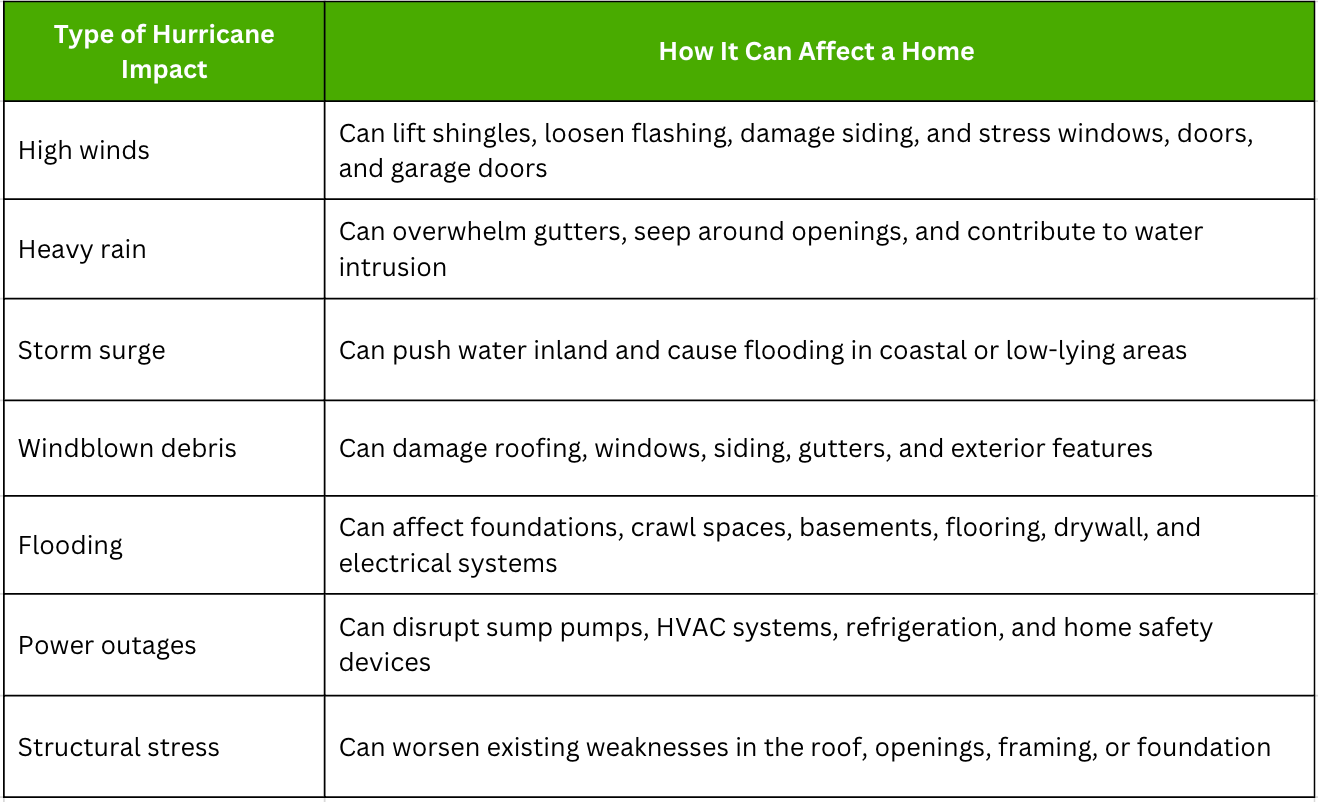
A hurricane category describes sustained wind speed, but home damage also depends on rainfall, storm surge, flooding, debris, and the condition of the property before the storm.
Higher hurricane categories generally mean stronger winds and greater potential for structural and exterior damage. However, the category level alone does not determine potential damage. A slower-moving storm with heavy rain can cause significant flooding, even if wind speeds are lower. Storm surge and inland flooding can also cause property damage.
Local conditions also matter when assessing your risk. Your home’s elevation, surrounding drainage, soil saturation, nearby trees, and overall condition all play a role in how a storm affects your property. The Saffir-Simpson Hurricane Wind Scale estimates potential property damage based on hurricane’s sustained wind speed, but it’s still important to prepare for the water and debris that come with these winds.
Roof Damage Is One of the Most Common Hurricane Impacts on Homes
Your roof acts as your home’s primary protection against the elements, taking the brunt of high winds and driving rain.
How Hurricanes Can Damage a Roof
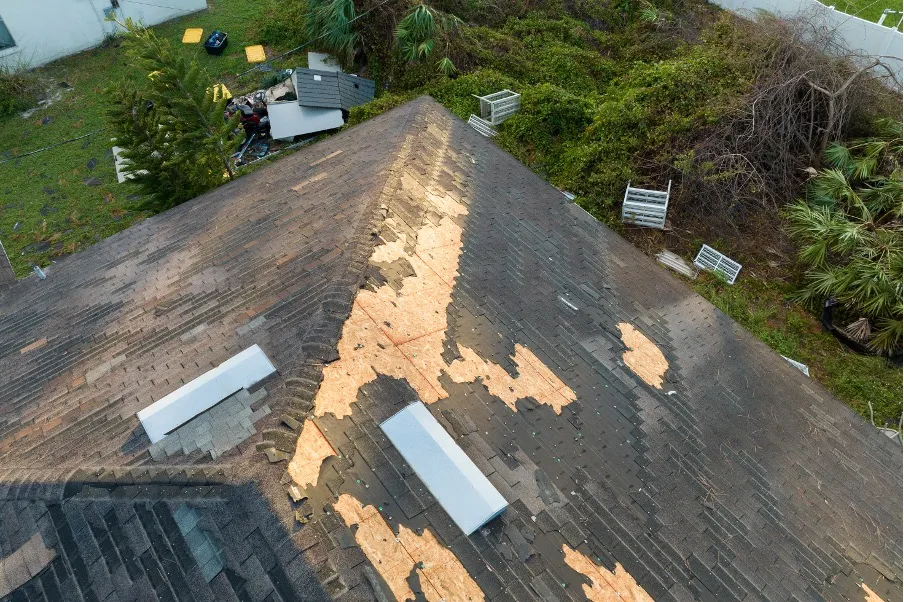
During a severe storm, high winds can lift, curl, crack, or completely remove shingles. Wind pressure can also put stress on the flashing around vents, chimneys, skylights, and valleys. When these areas are compromised, water may seep into weakened roof sections.
Heavy rain and debris can also cause granule loss, which may shorten the lifespan of your shingles. Hurricanes can damage roof edges, soffits, fascia, and vents. Often, the signs of damage may not be obvious from the outside right away. Leaks may appear in ceilings or attic spaces hours or days after the storm has passed.
Why Roof Condition Matters Before Hurricane Season
Older or already damaged roofs are more vulnerable to hurricane roof damage. Minor issues, such as a slightly loose shingle, can become much more noticeable during wind-driven rain. A professional roof inspection can help identify visible issues before storm season, giving you time to address them properly.
Choosing durable roofing designed for high-wind performance, along with ensuring professional installation, can help you feel more prepared. Curious about specific materials? Check out Erie Home’s article on how metal roofs hold up in strong winds.
If your roof has visible wear or past storm damage, a professional inspection can help you understand your options before hurricane season. Connect with your local Erie Home roofing expert to learn more.
Heavy Rain Can Overwhelm Gutters and Drainage Systems
A reliable gutter system is vital for protecting your home from heavy rain, keeping water safely flowing away from your roof and foundation.
How Gutters Are Affected During Hurricanes
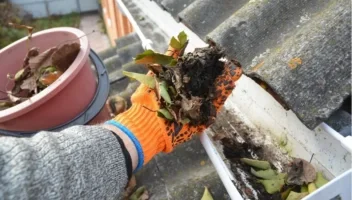
Heavy rain needs a clear path off the roof. Leaves, sticks, and other debris can easily clog gutters, especially when wind blows foliage around before the heaviest rain starts.
Clogged gutters can overflow, allowing water to pool near the foundation. Overflowing water may contribute to fascia damage, siding stains, roof-edge issues, and water intrusion near vulnerable points of your home. To help prevent pooling, downspouts should move water several feet away from the home.
Why Better Water Flow Matters
Gutters and downspouts are an essential part of the home drainage system. Reducing debris can help water move more efficiently during heavy rain, preventing back-ups that lead to expensive repairs. Discover how your gutter system moves water away from your home.
Help keep heavy rain moving in the right direction. Learn how LeafFilter Gutter Protection can help reduce debris buildup and support better water flow around your home when you need it most.
Flooding and Water Intrusion Can Affect Foundations, Crawl Spaces, and Basements
Excess water is one of the most common concerns during hurricane season. Heavy rain, storm surge, and poor drainage can all contribute to water intrusion around the home.
How Hurricanes Can Lead to Water Intrusion
Heavy rain can pool around the foundation, creating hydrostatic pressure that forces moisture into the home. Wind-driven rain can enter around worn seals, doors, windows, vents, or foundation cracks. Low-lying entry points may be more vulnerable to hurricane-related flood damage.
Storm surge and inland flooding can affect areas well beyond the nearby coastline. The National Weather Service notes that inland flooding from tropical systems can happen hundreds of miles inland and may persist for several days after a storm has weakened.
Why Basements and Lower Levels Need Attention
Finished basements can be affected by moisture, leading to damaged flooring, drywall, and stored belongings. Sump pumps may stop working during power outages if there is no backup system in place. Crawl spaces can also hold moisture, which may contribute to musty odors or other long-term concerns.
Homeowners with recurring water issues may want to explore waterproofing solutions to help protect lower levels. If you experience issues after a storm, you’ll want to know what to do if your basement floods after heavy rain.
If heavy rain regularly leads to water in your basement or lower level, Erie Home Basement Waterproofing can help you explore basement solutions to help improve moisture protection.
Windows, Doors, Garage Doors, and Exterior Openings Can Be Vulnerable
Your home’s exterior openings can face significant pressure during a hurricane. Wind can put stress on windows, doors, garage doors, sliding doors, and skylights. If these openings are broken or compromised, wind and rain may enter the home and place additional stress on the structure.
Garage doors are a frequent concern because they cover such a large opening. Homeowners can use storm shutters, pre-cut plywood, door reinforcement, and garage door bracing where appropriate to secure these weak points. Checking weatherstripping and seals can also help reduce wind-driven rain intrusion around doors and windows.
FEMA advises that high winds from hurricanes can damage garage doors, and if wind enters a garage, it may lead to greater structural damage. Taking the right steps to secure windows, doors, and garage doors before hurricane season can make a huge difference.
Windblown Debris Can Damage More Than the Exterior
High winds can pick up loose objects and turn them into destructive projectiles. Tree limbs, patio furniture, planters, grills, décor, tools, and trash cans can all become windblown debris. This debris may damage shingles, gutters, siding, windows, screens, fencing, and vehicles. Tree limbs near rooflines can easily scrape or puncture roofing materials as they sway in the wind. Yard preparation can reduce avoidable hazards before a storm.
Common outdoor items to secure before hurricane season include:
- Patio furniture
- Grills and propane tanks
- Planters and lawn décor
- Trash and recycling bins
- Garden tools
- Loose building materials
- Tree limbs near the roofline
Power Outages Can Create Additional Home Issues
When the grid goes down, your home may lose access to some important systems. Power outages can affect sump pumps, HVAC systems, refrigerators, freezers, security systems, lighting, and communication devices.
Backup batteries for sump pumps can help protect your property if your home has a basement or lower level that is prone to flooding. If you plan to use a generator, always use it outdoors, away from windows and doors, to help prevent carbon monoxide poisoning.
Charging power banks and stocking batteries should also be part of your hurricane season home preparation checklist.
What Homeowners Can Do Before Hurricane Season
While homeowners cannot prevent a hurricane, they can take practical steps to prepare their homes and reduce avoidable issues. A little preparation before the storm season can help you feel more confident and organized.
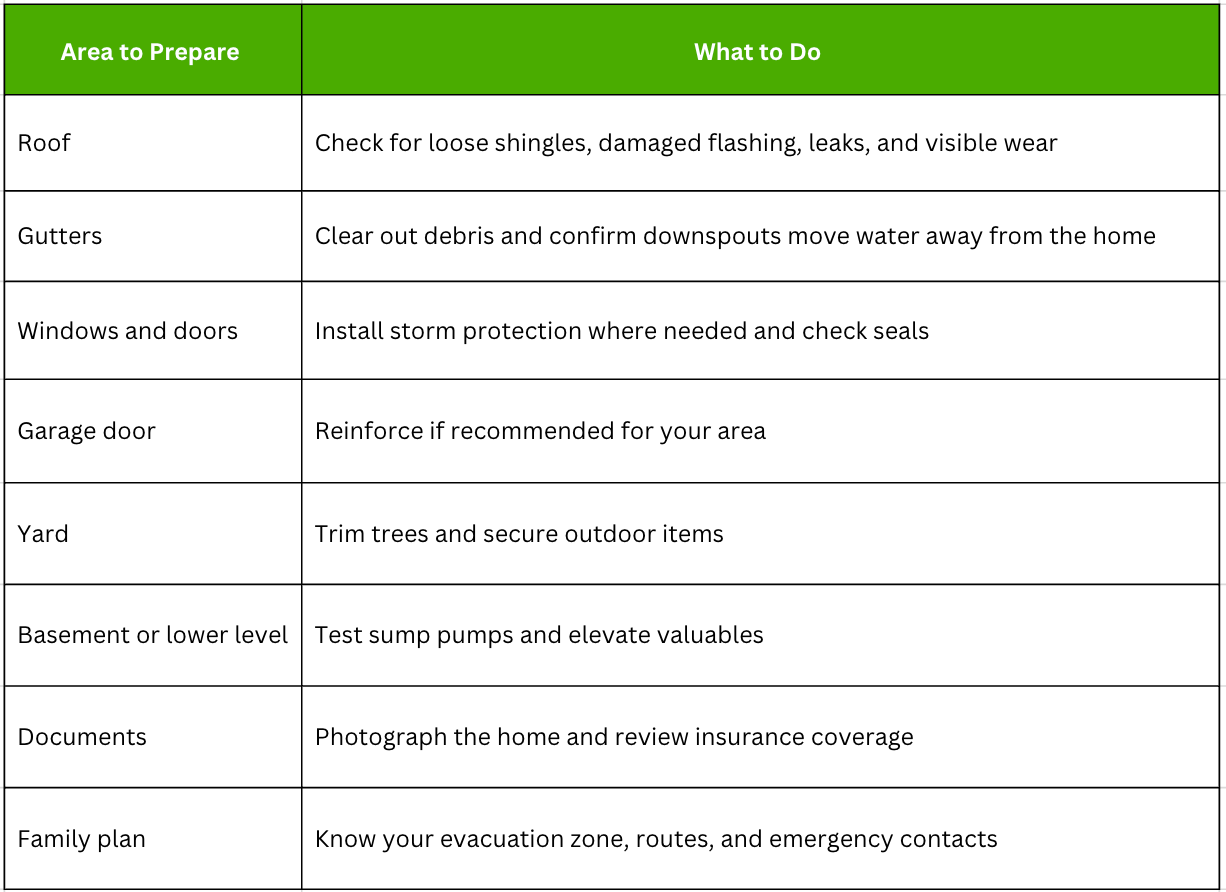
For a complete guide, review the hurricane season home preparation checklist.
What to Check After a Hurricane
Once the storm has passed, assess the situation calmly and safely. Start with safety first. Homeowners should only inspect the property when local officials say it is safe to do so.
Exterior and Roof Check
From the ground, look for missing shingles, lifted edges, damaged flashing, dents, broken branches, or visible debris. Check gutters and downspouts for sagging, separation, or clogs.
Do not climb on the roof after a storm. Damage may have compromised its structure and rendered its surface unsafe. Call a professional if damage is visible or if leaks appear indoors.
Interior and Water Check
Inside the home, look for ceiling stains, damp walls, musty odors, wet flooring, or water pooling near windows and doors. Check the basement, crawl space, sump pump, and lower-level storage areas for moisture.
Move wet belongings away from walls when it’s safe and document any damage before beginning cleanup.
Documentation and Insurance
Take photos and videos before starting your cleanup, provided it is safe to do so. Save receipts for any temporary repairs you make. Contact your insurance company promptly if there is any damage.
Avoid signing any repair agreements before reviewing the contractor’s credentials and verifying your coverage. Understanding how roofing materials and home insurance may be linked can also help support your claims process.
The National Weather Service advises getting an insurance checkup and documenting possessions as critical steps in hurricane preparedness.
When to Call a Professional After Hurricane Damage
Sometimes, the damage requires experienced hands. You should call a professional if you notice:
- Roof leaks or missing shingles
- Sagging gutters or detached downspouts
- Water in the basement or lower level
- Cracked foundation areas or water entering near walls
- Damaged flashing, vents, or roof edges
- Persistent moisture or musty odors
- Electrical concerns or standing water near outlets and appliances
After a hurricane or heavy rain event, a professional assessment can help you understand what needs attention. Explore Erie Home Roofing, LeafFilter Gutter Protection, and Erie Home Basement Waterproofing solutions designed to help protect your home season after season.
Understanding Hurricane Impact Can Help You Prepare Your Home
Hurricanes can affect the roof, gutters, drainage, foundation, exterior openings, and interior spaces. Knowing common types of damage can help homeowners prepare for hurricane season and know what to look out for afterward.
Preparation is all about practical, manageable steps. The more you understand how hurricanes can impact homes, the easier it is to prepare with confidence before the next storm season begins.
Frequently Asked Questions
What is the most common hurricane damage to homes?
Common hurricane damage to homes includes roof damage, water intrusion, gutter and drainage issues, broken windows, damaged doors, flooding, and damage from windblown debris.
How do hurricanes damage roofs?
High winds, wind-driven rain, flying debris, and pressure changes around the home from hurricanes can damage roofs. Common signs of roof damage include missing shingles, lifted roof edges, damaged flashing, leaks, and granule loss.
Can heavy rain from a hurricane damage gutters?
Yes. Heavy rain can overwhelm gutters, especially if they are clogged with leaves, sticks, or storm debris. When gutters overflow, water may pool near the foundation or back up near roof edges.
Can hurricanes cause basement flooding?
Yes. Hurricanes can contribute to basement or lower-level flooding from heavy rain, poor drainage, sump pump failure, foundation cracks, or rising water near low entry points.
What should I check first after a hurricane?
When it is safe to do so, start with a visual exterior check from the ground. Look for roof damage, clogged or detached gutters, downed branches, broken windows, water near the foundation, and signs of interior leaks.
How can I prepare my home before hurricane season?
Prepare your home by inspecting your roof, clearing out gutters, securing windows and doors, trimming trees, testing sump pumps, gathering supplies, reviewing insurance, documenting your property, and knowing your evacuation plan.
Resources
- Federal Insurance and Mitigation Administration (FEMA). Avoiding Hurricane Damage: A Checklist for Homeowners. https://www.fema.gov/pdf/media/factsheets/2011/avoiding_hurricane_damage.pdf.
- National Weather Service. Hurricane Hazards. Updated 2026. https://www.weather.gov/wrn/hurricane-hazards.
- National Weather Service. Hurricane Preparedness Week May 3 through May 9, 2026. https://www.weather.gov/akq/NCHurricanePreparednessWeek.
- National Weather Service. Saffir-Simpson Hurricane Scale. Updated 2026. https://www.weather.gov/mfl/saffirsimpson
- StateOfFlorida.com. The Essential Guide to Hurricane Preparedness. Christine Harrison. Updated 2026. https://www.stateofflorida.com/articles/hurricane-preparedness-guide/.