

How to Prepare Your Home for Hurricane Season
Hurricane season can bring heavy rain, high winds, flying debris, and power outages. While you can’t control the weather, a little preparation can help you feel more ready and organized when storm warnings arise.
Start with the areas of your home most exposed to wind and rain. Once those are addressed, take practical steps to protect your property, belongings, and household plan. Next, use this guide to cover key hurricane season preparations: roof and exterior openings, gutters and drainage, yard hazards, emergency supplies, important documents, and evacuation planning.
Why Hurricane Season Preparation Matters for Homeowners
Preparing your home before a storm is one of the smartest steps homeowners can take. Hurricane season can bring heavy rain, high winds, storm surge, power outages, and flying debris. Careful preparation helps reduce damage and makes it easier to respond if conditions change suddenly.
Hurricane preparedness means more than stockpiling emergency supplies. Proper home preparation for hurricane season involves securing your home’s exterior, improving drainage, protecting vital documents, setting up local alerts, and mapping out evacuation routes.
According to Florida Disaster, residents should “know your zone, know your home,” build a reliable disaster supply kit, keep copies of important documents, and sign up for local resources. By tackling these tasks early, you give yourself peace of mind. To learn more about how severe weather affects your property, check out our article on Hurricane Impact on Homes.
Start With Your Roof and Exterior Openings
The exterior of your home is your first line of defense against severe weather. Taking care of your roof and securing vulnerable openings are key steps in preparing your home for a hurricane.
Inspect Your Roof Before Hurricane Season
Your roof takes the brunt during high winds and heavy downpours. Start by looking for loose, curled, cracked, or missing shingles. Check your attic and ceilings for soft spots, sagging, or signs of water damage that could point to a hidden leak.
You should also inspect the flashing around chimneys, vents, skylights, and roof valleys. These are common areas where water can seep in. Watch for severe granule loss, exposed fasteners, damaged roof edges, or other signs of wear.
If your roof is aging, has visible wear, or has already been through severe weather, it is wise to schedule a professional inspection. Investing in metal roofing installation in hurricane season or beforehand can save you a lot of stress later. A durable, professionally installed roofing system can help homeowners feel more confident before storm season arrives. While no roof is completely “hurricane-proof,” a hurricane-ready roof designed for high winds can significantly reduce the risk of hurricane damage to roof structures.
Secure Windows, Doors, and the Garage Door
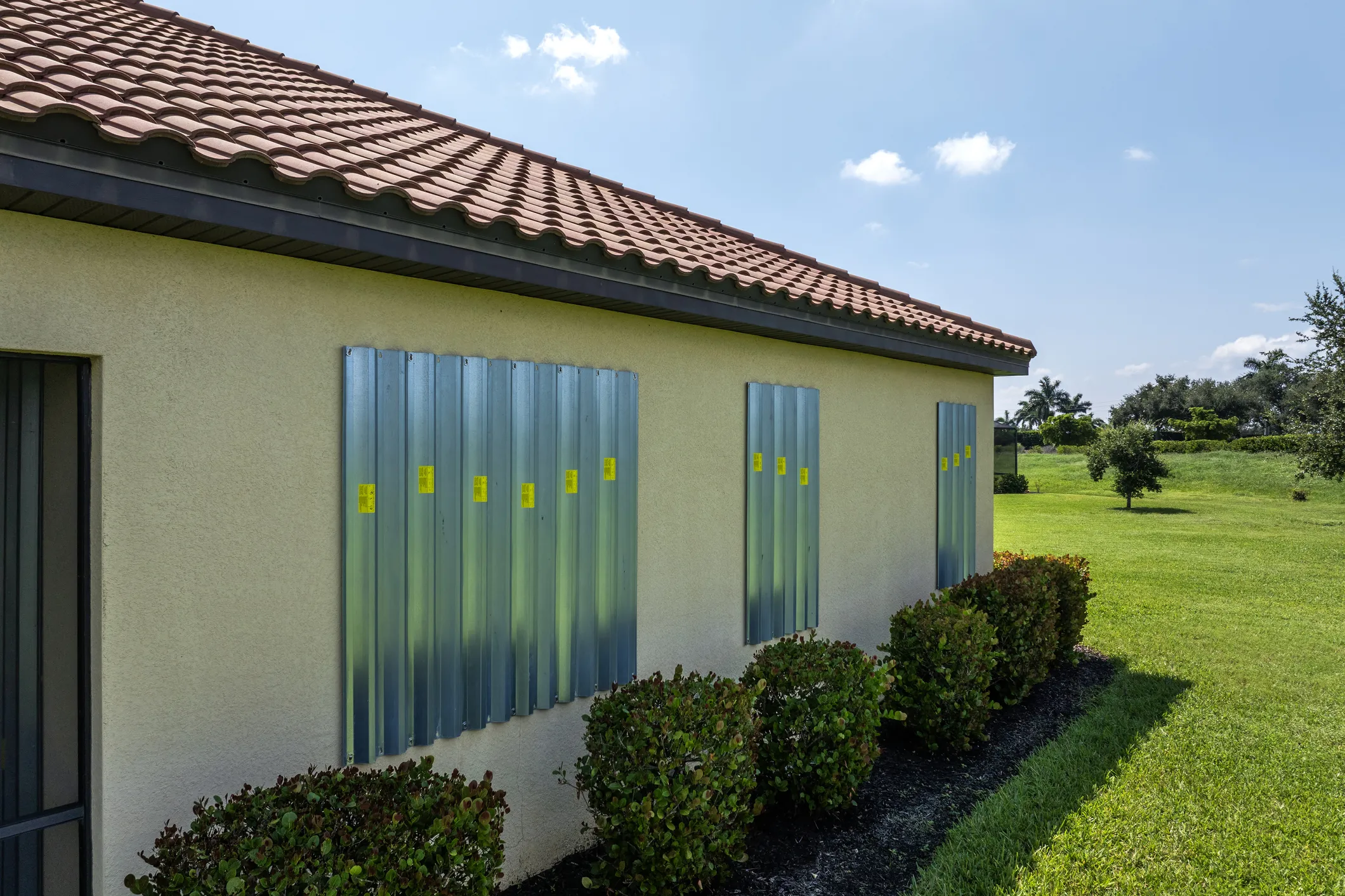
Windows and doors are vulnerable to wind pressure and debris. Install storm shutters or pre-cut plywood to help protect the glass. Check the weather seals on doors and windows to confirm they fit tightly against heavy rain.
It is also important to reinforce sliding doors, which can easily pop off their tracks under pressure. Consider installing a garage door bracing kit. Garage doors span a large area and are vulnerable during high-wind events. As Florida Disaster notes, protecting areas where wind can enter—such as roofs, windows, doors, and garage doors—is one of the most important precautions homeowners can take.
Not sure whether your roof is ready for heavy rain and high winds? Schedule a professional roof assessment with your local Erie Home roofing expert before hurricane season begins.
Clear Out Gutters and Improve Water Flow Around the Home
Heavy rain needs a clear path off your roof and away from your home’s foundation. When gutters are clogged, water can spill over, pool near the foundation, or back up along the roof edges. That can contribute to leaks and water damage.
Take an afternoon to clean out your gutters of leaves and other debris. Once the gutters are cleaned out, confirm that the downspouts direct water several feet from the home. Check that your splash blocks and downspout extensions are secure and function properly.
Installing quality gutter protection can help reduce debris buildup and support better water flow during heavy rain. LeafFilter helps reduce debris in gutters, allowing water to move more freely through the entire gutter system. Keeping your gutters cleared out is a simple but highly effective way to protect your home from heavy rain.
Help keep heavy rain moving in the right direction. Learn how LeafFilter gutter protection can help reduce debris buildup and support better water flow.can help reduce debris buildup and support better water flow.
Reduce Yard and Debris Hazards Before a Storm
High winds can turn everyday outdoor items into hazards. Before a storm arrives, take a walk around your property to identify anything that could be picked up by strong gusts. Keep the process practical by focusing on a few specific tasks.
Before hurricane season, reduce outdoor debris by following these steps:
- Trim trees and remove dead limbs near the roof, windows, and driveway.
- Bring in patio furniture, planters, umbrellas, grills, outdoor décor, toys, and trash cans.
- Anchor larger items, like propane tanks or heavy benches, that cannot easily be moved indoors.
- Check fences, sheds, and gates for loose panels or rusty hardware, securing them as needed.
- Store loose materials, such as lumber, tools, or garden supplies, in a garage or locked shed.
Taking these steps helps protect your home and makes it safer from windblown debris.
Prepare for Heavy Rain and Possible Water Intrusion
When hurricane-force winds pair with heavy rain, water often finds a way inside. Heavy rain home protection requires a mix of sealing, grading, and preparation.
Check all door and window seals and replace any worn caulking or weatherstripping. If appropriate for your area, use sandbags or water barriers at low entry points to block rising water. Walk around your home to make sure the soil grading directs water away from the foundation, rather than toward it. Clear exterior drains and stairwell drains of any leaves or dirt.
If you have a basement, test your sump pumps before storm season. Check the backup in your home, if you have one, to ensure they’re fully charged. You should also elevate valuables, electronics, and store documents off the basement floor or move them to upper levels if basement flooding is a concern.
For homeowners who regularly experience water intrusion, Erie basement waterproofing offers effective solutions to help manage flooded basements and keep your home dry.
Prepare for Power Outages and Supply Needs
Power outages are common during hurricanes. Preparing for a blackout keeps your household more comfortable and safer until power returns. Charge power banks, cell phones, and essential devices ahead of time. If you have a generator, test it beforehand. Always run generators outdoors, at least 20 feet from windows and doors, to help prevent carbon monoxide poisoning.
Stock up on flashlights, batteries, coolers, and ice packs. Set your refrigerator and freezer to their coldest settings ahead of severe weather to keep food fresher longer if the power goes out. Keep a manual can opener in your kitchen drawer. Many preparedness resources, including Florida Disaster, encourage residents to prepare at least 7 days of essentials.
Hurricane Season Supply Basics
- Water (one gallon per person per day)
- Shelf-stable food
- Medications and prescriptions
- Flashlights and extra batteries
- Phone chargers and power banks
- First-aid supplies
- Pet supplies (food, water, leashes, crates)
- Copies of important documents
Review Insurance, Documents, and Communication Plans
Administrative preparation is just as important as securing your home’s exterior. Start by reviewing your homeowners’ insurance policy. You need to understand the difference between wind and flood coverage, as standard policies typically do not cover flood damage. Confirm your deductibles and coverage limits to avoid surprises later.
Take the time to photograph or film your home’s exterior, interior rooms, valuables, roof condition, gutters, and major appliances. Store these copies digitally on a cloud drive and keep physical copies in a waterproof folder.
Create a clear family communication plan. Make sure you know your local evacuation routes and make arrangements for your pets if you need to leave. Enable local weather and emergency alerts on your smartphone. The National Weather Service recommends preparing before hurricane season by developing an evacuation plan, assembling disaster supplies, getting an insurance checkup, documenting possessions, and creating a communication plan.
Before hurricane season, review insurance coverage, document your property, save digital copies of important papers, and make sure everyone in the household knows the communication and evacuation plan.
Know Your Evacuation Zone and When to Leave
Planning ahead helps reduce last-minute decisions and stress. Know your evacuation zone before storm conditions develop so you understand your specific risk level. Always follow instructions from local officials.
Plan more than one evacuation route in case your primary road is blocked by traffic or water. Decide exactly where you will go—whether that is to family, friends, a hotel, or a designated public shelter. Keep your vehicle’s fuel levels topped off during storm watches, as gas stations can quickly run out of fuel or lose power. Have your go-bags ready for both people and pets so you can hit the road quickly if an order is issued. The National Weather Service’s hurricane preparedness guidance emphasizes understanding your risk, having multiple ways to receive forecasts and alerts, and knowing exactly what to do before, during, and after a storm.
Hurricane Season Home Preparation Checklist
Use this simple checklist to keep your home preparation for hurricane season on track.
Structure and Exterior
- Inspect roof shingles, flashing, vents, and soft spots.
- Secure windows, doors, and sliding glass doors.
- Reinforce the garage door if needed.
- Check seals around doors and windows.
Gutters and Drainage
- Clear out gutters and downspouts.
- Confirm that downspouts move water away from the home.
- Remove roofline and gutter debris.
- Check exterior drains and low entry points.
Yard and Outdoor Items
- Trim trees and remove dead limbs.
- Bring in or anchor outdoor furniture, grills, décor, and tools.
- Secure fences, sheds, and loose materials.
Supplies and Power
- Charge phones and power banks.
- Test generators safely outdoors.
- Stock 3–7 days of food, water, medications, batteries, and pet supplies.
- Prepare flashlights, coolers, and first-aid items.
Documents and Plan
- Review insurance coverage.
- Photograph the home and belongings.
- Save important documents digitally.
- Know evacuation routes and local alert systems.
- Keep go-bags ready.
Make Hurricane Season Preparation Part of Your Home Maintenance Routine
Your roof, gutters, drainage, and documentation are all vital parts of a hurricane-ready home. By making these steps part of your standard home maintenance routine, hurricane preparedness becomes much easier to handle before conditions change. A seasonal checkup helps homeowners identify small issues before heavy rain and high wind arrive.
Before hurricane season, make sure your home’s exterior is ready for heavy rain and high winds. Explore your local Erie Home Roofing, LeafFilter Gutter Protection, and Erie Home Basement Waterproofing solutions designed to help protect your home year-round.
Frequently Asked Questions
When should I start preparing my home for hurricane season?
Begin preparing before hurricane season starts so you have time to inspect your roof, clear out gutters, gather supplies, review insurance, and make a household plan. NOAA advises that pre-season preparation is an important part of hurricane readiness.
What part of my home should I check first before hurricane season?
Start with the areas most exposed to wind and rain, including the roof, windows, doors, the garage door, gutters, and drainage points.
How do gutters help during hurricane season?
Gutters help move rainwater off the roof and safely away from the home’s foundation. When gutters are clogged with leaves and debris, water may overflow, pool near the foundation, or collect near vulnerable areas of the exterior, leading to possible water intrusion and foundation damage.
Should I inspect my roof before hurricane season?
Yes. A roof inspection can help identify loose shingles, damaged flashing, soft spots, or other issues that may become more noticeable during heavy rain or high winds.
How many days of supplies should I have for hurricane season?
Many preparedness resources recommend having several days of essentials on hand. Florida Disaster encourages residents to prepare at least 7 days of supplies, including food, water, medicine, and extra batteries.
Resources
- FloridaDisaster.org. Preparing for Hurricane Season. Updated 2026. https://www.floridadisaster.org/planprepare/preparing-for-hurricane-season/
- FloridaDistaster.org. Plan & Prepare. 2026. https://www.floridadisaster.org/planprepare/
- FloridaDistaster.org. Planning for Your Home. Updated 2026. https://www.floridadisaster.org/planprepare/home/
- National Oceanic and Atmospheric Administration. Prepare Before Hurricane Season. Updated April 2026. https://www.noaa.gov/prepare-before-hurricane-season
- National Weather Service. Hurricane Preparedness. Updated 2026. https://www.weather.gov/mhx/hurricaneprep
- U.S. Centers for Disease Control and Prevention. Natural Disasters and Severe Weather. Use a Generator Safely. February 2024. https://www.cdc.gov/natural-disasters/psa-toolkit/use-a-generator-safely.html.