
How to Prepare Your Home for Summer Storms and Heavy Rain
Summer brings longer days, warmer temperatures and the kind of fast-moving storms that can test every part of your home. Heavy rainfall, high winds, and flying debris don’t give you much warning. But a little preparation before stormy weather arrives can go a long way toward keeping water moving in the right direction and reducing the risk of damage to your roof, gutters, basement, foundation and outdoor spaces.
The good news: you don’t need to overhaul your entire home. A focused checklist of maintenance tasks, inspections and small fixes can make a real difference when summer rain hits. This guide walks you through exactly what to check, what to watch for, and when to call a professional.
In this article:
- How Do You Prepare Your Home for Summer Storms
- How Do Summer Storms Affect Your Home?
- Start With Your Gutters and Downspouts
- Inspect Your Roof Before Heavy Summer Rain
- Help Protect Your Basement and Foundation From Water Intrusion
- Prepare the Outside of Your Home
- Create a Simple Family Storm Safety Plan
- What to Check After a Summer Storm
- When to Schedule a Professional Home Inspection
- Prepare Now for a More Comfortable Summer
- Frequently Asked Questions
How Do You Prepare Your Home for Summer Storms?
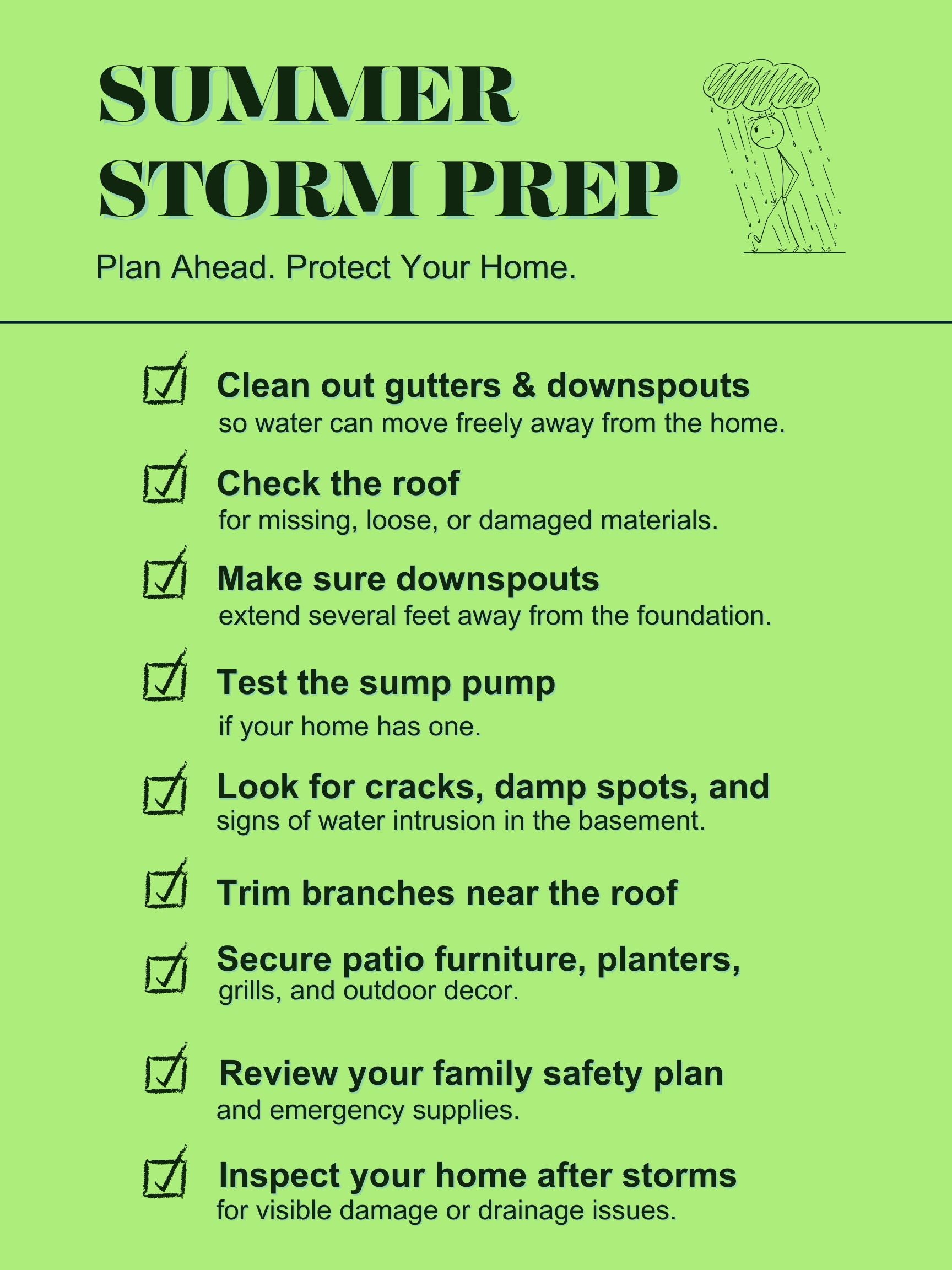
To prepare your home for summer storms, focus on the parts of your home most affected by heavy rain, wind, debris, and water runoff. Start with this quick hit checklist.
If your home already has ongoing gutter, roof or basement water concerns, a professional inspection can help identify areas that may need attention before the next round of summer rain.
How Do Summer Storms Affect Your Home?
Summer storms can bring heavy rainfall, strong winds, hail, fallen branches and debris, all at once. Each of those elements stresses a different part of your home.
Heavy rain can overwhelm gutters that are clogged with leaves and debris, causing water to spill over the sides instead of draining away from the home. When water pools near your home’s foundation, it increases hydrostatic pressure against basement walls, which can lead to seepage and water intrusion over time. Saturated soil heightens the problem. This is particularly true for homes where the yard doesn’t slope away from the foundation.
Wind loosens vulnerable roofing materials, carrying debris onto the roof and into gutters. Older roofs with worn shingles or damaged flashing are more susceptible to such conditions. A single storm season can accelerate wear that’s already been building for years.
Poor yard drainage, clogged downspouts, and unfinished waterproofing are often invisible until a storm makes them obvious. That’s especially true across the Midwest, Central Plains and Northeast, where periods of heavy summer rain and fast-moving storms are common throughout the season.
Understanding how these systems connect, from the roofline down to the foundation, is the first step toward knowing what to prepare.
Start With Your Gutters and Downspouts
Gutters are one of the first lines of defense against summer rain. Understanding how your gutter system works helps you see why keeping it cleared out matters so much. When water can’t move through the system efficiently, it has nowhere to go but over the edges or back toward the home.
Check for Leaves, Twigs and Debris
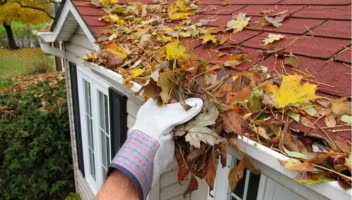
Storm debris collects quickly, especially after windy weather. Leaves, twigs, and other debris build up in gutters between cleanings, and it doesn’t take much to cause a blockage. When gutters are clogged, water spills over the sides instead of flowing through the downspouts and away from the home.
A professionally installed gutter protection system, like LeafFilter, can help reduce debris buildup, allowing rainwater to flow more freely through your gutters and away from your home. For a closer look at how gutter guards perform in heavy rain, it’s worth understanding which systems hold up best under high-volume conditions.
Make Sure Downspouts Direct Water Away From the Foundation
Clearing debris out of gutters only solves part of the problem. Downspouts need to direct water several feet away from the foundation, not just dump it at the base of your home. Extensions help move water further out. If your downspouts discharge close to the foundation, pooling water can seep into the basement over time.
After heavy rain, check where water is actually landing. If it’s collecting near your house, adjusting the discharge point is a straightforward fix that can help reduce long-term risk.
Concerned about how your gutters are holding up? LeafFilter can help you keep water flowing in the right direction, season after season.
Inspect Your Roof Before Heavy Summer Rain
The roof takes the full impact of everything a summer storm brings. Rain, wind, hail and debris all land there first. A well-maintained, durable roofing system helps your home better handle seasonal conditions. One that’s already worn or damaged is more likely to let water in when it counts.
Look for Visible Signs of Roof Wear
You don’t need to climb onto the roof for a basic check. From the ground, look for:
- Missing, curled, cracked or loose shingles
- Damaged or lifted flashing around vents, chimneys or skylights
- Sagging areas anywhere on the roofline
- Granules collecting near downspouts, which can signal shingle wear
- Stains on interior ceilings or attic surfaces
- Debris sitting on the roof after storms
These are the same indicators our Erie Home roofing team checks during professional inspections. Knowing what to look for helps you catch issues before they turn into leaks. For a full rundown of what to watch for, our guide on signs you may need a new roof breaks it down clearly.
Know When to Call a Roofing Professional
Don’t climb onto the roof during or after a storm. Wet surfaces are slippery, and the structural condition of a storm-damaged roof isn’t always obvious from above. If you notice signs of damage, recurring leaks or ceiling stains, you can’t explain, schedule a professional inspection.
Choosing the right roofing materials also matters. If you’re weighing your options, this guide to choosing the best roofing material for your home explains how different materials perform in rain, wind, and heat. And if you’re thinking longer-term, what to know about roof replacement covers the full process from inspection to installation.
If your roof is aging or showing signs of wear, our roofing experts at Erie Home can help you explore durable roofing options built for long-term protection. Our metal roofing systems can withstand up to 120 mph winds, helping homes better stand up to severe weather, including conditions common in hurricane-prone areas.
Help Protect Your Basement and Foundation From Water Intrusion
Heavy rainfall doesn’t just affect what’s above ground. Water that can’t drain away from the home eventually finds its way to the foundation, and from there, potentially into the basement. The connection between gutters, grading, downspouts, and below-grade spaces is direct.
Keep Water Moving Away From the Home
When gutters overflow or downspouts discharge too close to yourhome, water accumulates near the foundation. Over time, pressure can push moisture through foundation walls. The ground around your home should slope away from the structure, so runoff moves outward, not inward. Even small grading issues can become noticeable after a summer with heavy rainfall.
Check for Basement Warning Signs
Before storm season picks up, take a few minutes to look for these common indicators of water intrusion:
- Damp walls or floors after rain
- Musty odors that weren’t there before
- Water stains at the base of the walls
- Efflorescence, which appears as white or chalky residue on concrete
- Cracks in walls or floors
- Water collecting around the basement windows
- A sump pump that runs frequently or fails to activate
Any of these warrant your attention. Some issues can be addressed early with minor repairs. Others point to underlying drainage problems that benefit from a professional waterproofing assessment. If you’re dealing with water after a storm, this article on what to do when water gets in your basement after rain is a good starting point. For more involved situations, our guide on solutions for a flooded basement covers response steps and long-term options.
Test Your Sump Pump Before Stormy Weather
If your home has a sump pump, test it before the season gets going. Pour water into the pit to confirm it activates and drains properly. If you’ve had power outages during past storms, a battery backup can help keep the pump running when you need it most.
Recurring dampness, pooling water or musty odors may be signs that your basement needs professional waterproofing.
Prepare the Outside of Your Home
The yard and outdoor spaces are often overlooked in storm preparation, but they directly affect how well your home withstands heavy rain and wind.
Work through this checklist before forecasted storms arrive:
- Trim branches near the roof, gutters, siding, and windows so they can’t cause damage during high winds.
- Remove loose yard debris that could become a hazard.
- Secure patio furniture, umbrellas, grills, planters, toys and garden décor.
- Check fences, gates, and sheds for loose components.
- Make sure storm drains, driveway drains, and yard drains are clear.
- Confirm that soil slopes away from the home where possible.
- Move valuables or moisture-sensitive items away from the basement floors.
None of this takes long. A walk around the property before a storm moves through is one of the simplest ways to reduce risk.
Create a Simple Family Storm Safety Plan
A basic household plan takes the guesswork out of stormy weather. You don’t need a complicated protocol. A few clear decisions made in advance are enough to keep everyone calm and prepared.
Think through these points and make sure everyone in the household knows the answers:
- Where does your family go in the home during strong winds or a severe weather alert? A lower floor, an interior room away from windows.
- Are phones charged when storms are expected?
- Do you have flashlights, batteries, a basic first-aid kit, bottled water, and pet supplies on hand?
- Does everyone know how to access local weather alerts?
- Are important documents stored somewhere protected from water damage?
- Does your plan account for children, older adults, pets or family members with specific needs?
A simple plan makes stormy weather more manageable, especially when everyone in the household already knows what to do and where to go.
What to Check After a Summer Storm
Once a storm passes and conditions are safe, take a careful look around the property. Here’s what to assess:
- Look for water pooling near the foundation.
- Check gutters and downspouts for visible clogs, sagging, or overflow marks.
- Look for roof debris, missing materials, or visible damage from the ground.
- Check attic or ceiling areas for new stains.
- Inspect the basement for dampness, odors, or watermarks.
- Confirm that sump pumps and drains are working properly.
- Photograph any visible damage for documentation.
Pro Tip: Stay off ladders on wet or slippery surfaces, and don’t touch downed wires, downed trees near electrical lines or damaged electrical equipment. If you notice leaks, water intrusion or storm-related damage, contact a professional rather than attempting repairs yourself.
When to Schedule a Professional Home Inspection
Some concerns are worth addressing before you experience a bigger problem. Consider scheduling a professional inspection if you notice any of the following:
- Gutters are overflowing repeatedly during heavy rain.
- Water is collecting near the foundation.
- Basement dampness, musty odors or water stains
- Roof leaks or ceiling stains
- Visible roof damage or missing materials
- An aging roof or gutter system that hasn’t been inspected recently
- Previous storm-related water damage that was never fully assessed
- Uncertainty about whether your home’s drainage setup can handle heavy rainfall
Whether you’re concerned about clogged gutters, an aging roof or basement water intrusion, our professional home improvement experts at LeafFilter and Erie Home can help you identify practical solutions to better prepare your home for summer storms and heavy rainfall. Addressing those concerns from the roofline down to the foundation gives your home the best chance of handling whatever the season brings.
Prepare Now for a More Comfortable Summer
Summer storm preparedness doesn’t have to be complicated. Keep water moving away from the home. Inspect the roof and gutters before the season peaks. Watch for signs of water intrusion in the basement. Secure outdoor spaces before forecasted storms. Have a clear, simple family plan in place.
These steps aren’t dramatic. They’re practical. And taking care of them now means you won’t be scrambling after the first major storm of the season. If any of these areas have already been on your radar, reach out to LeafFilter or Erie Home for a complimentary professional assessment. Getting ahead of the problem is always easier than responding to one.
Frequently Asked Questions
How do I prepare my home for summer storms?
Prepare by checking your gutters, roof, downspouts, basement, sump pump, yard drainage and outdoor spaces. Secure loose items outside, trim nearby branches and review your family safety plan before heavy rainfall or strong winds arrive. Addressing each of these areas before the season peaks helps reduce the risk of water damage and helps your home withstand whatever comes through.
Can clogged gutters cause water damage during summer storms?
Yes. When gutters are clogged with leaves, twigs, or other debris, rainwater is likely to overflow instead of moving through the downspouts. That overflow can send water toward your siding, foundation, basement, or landscaping creating conditions that lead to water intrusion and structural stress over time.
What should I check on my roof before summer storms?
From the ground, look for missing, cracked, curled or loose roofing materials; damaged flashing; debris sitting on the roof; ceiling stains or any signs of leaks. If you notice concerns, contact a roofing professional rather than climbing onto the roof yourself. Aging roofs are more vulnerable to storm-related wear, so it’s worth scheduling a professional inspection if yours is overdue.
How can I help protect my basement from heavy rainfall?
Keep gutters and downspouts cleared out and functioning, direct water away from the foundation, test your sump pump, check for cracks or dampness and confirm the ground around your home slopes away from the structure. If water intrusion is recurring, professional basement waterproofing can address the underlying drainage issues rather than just managing the symptoms.
What should I do after a summer storm?
Once conditions are safe, inspect your property from the ground. Check for roof debris, gutter overflow, water pooling near the foundation, basement dampness and visible damage. Photograph anything notable. If you notice leaks, water intrusion or storm-related damage, contact a professional. Avoid ladders on wet surfaces and stay away from any downed wires or damaged electrical equipment.